South Korea moved to suspend on Wednesday part of a military agreement it signed with Pyongyang in 2018 after the isolated North defied warnings from the United States and its allies and launched a spy satellite, calling it a success.
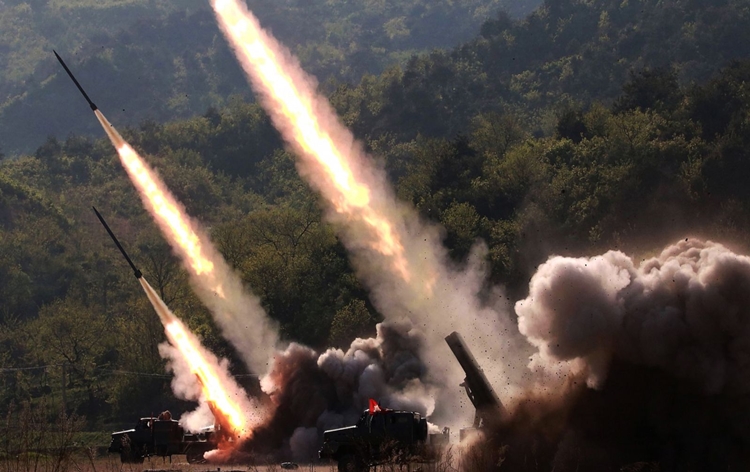
North Korea said it placed its first spy satellite in orbit on Tuesday and vowed to launch more in the near future. Photographs published by North Korean state media showed what appeared to be leader Kim Jong Un watching the fiery launch of a rocket from a base.
Officials in South Korea and Japan, which first reported the launch, could not immediately verify whether a satellite was in orbit. Pentagon spokesperson Sabrina Singh said the U.S. military was still assessing whether the launch was a success.
South Korean Prime Minister Han Duck-soo hosted a cabinet meeting on Wednesday and said in televised remarks the government was moving ahead to suspend part of the inter-Korean pact.
President Yoon Suk Yeol is in Britain for a state visit and earlier led a meeting of the National Security Council with some ministers and the national intelligence chief by video link.
The pact, known as the Comprehensive Military Agreement and aimed at de-escalating tensions in the Korean peninsula, was signed at a 2018 summit between former South Korean President Moon Jae-in and North Korean leader Kim Jong-un.
The two sides agreed to impose buffer zones where live-fire drills will be suspended, as well as no-fly zones, remove some guard posts from the Demilitarized Zone separating the countries, and maintain hotlines, among other measures.
But the agreement has come under growing scrutiny and faced calls to be scrapped or suspended as critics say it limits Seoul's ability to monitor North Korea's actions around the border.
South Korea's National Security Council said in a statement the move would involve restoring reconnaissance and surveillance operations around the military demarcation line between the countries.
North Korea's KCNA state news agency said the Malligyong-1 satellite was launched on a Chollima-1 rocket from the Sohae satellite launch facility at 10:42 p.m. (1342 GMT) on Tuesday and entered orbit at 10:54 p.m. (1354 GMT). KCNA cited North Korea's National Aerospace Technology Administration.
North Korea had notified Japan it planned to launch a satellite between Wednesday and Dec. 1, after two failed attempts to launch what it called spy satellites this year.
U.S. National Security Council spokesperson Adrienne Watson called the launch “a brazen violation of multiple U.N. Security Council resolutions,” and said it “raises tensions, and risks destabilizing the security situation in the region and beyond.”
Tuesday's launch is the first since North Korean leader Kim Jong Un met Vladimir Putin at Russia's modern space facility in September for a summit at which the Russian president promised to help Pyongyang build satellites.
South Korean officials have said the latest launch attempt most likely incorporated technical assistance from Moscow as part of a growing partnership that has seen North Korea send millions of artillery shells to Russia.
Some missile experts, however, said it may be too soon for Russian technical assistance to have been fully incorporated in the satellite or the rocket.
“We have to see how properly this is being operated,” said Lee Choon-geun, a rocket expert at South Korea's Science and Technology Policy Institute.
Russia and North Korea have denied conducting arms deals, but are publicly promising deeper cooperation.
KCNA said Kim Jong Un personally observed the launch, which came just over a week before South Korea plans to send its first spy satellite into space on a rocket operated by the U.S. company Space X.
After the May launch attempt, South Korea retrieved the wreckage of the satellite from the sea and said an analysis showed it had limited use as a reconnaissance platform.
South Korea's military said it believed the latest rocket carried a reconnaissance satellite and was launched toward the south.
Over its emergency broadcasting system, the Japanese government told residents in Okinawa to take cover inside buildings or underground. It later said the rocket appeared to have flown over and past Okinawa towards the Pacific Ocean, and it lifted its emergency warning.
(REUTERS)