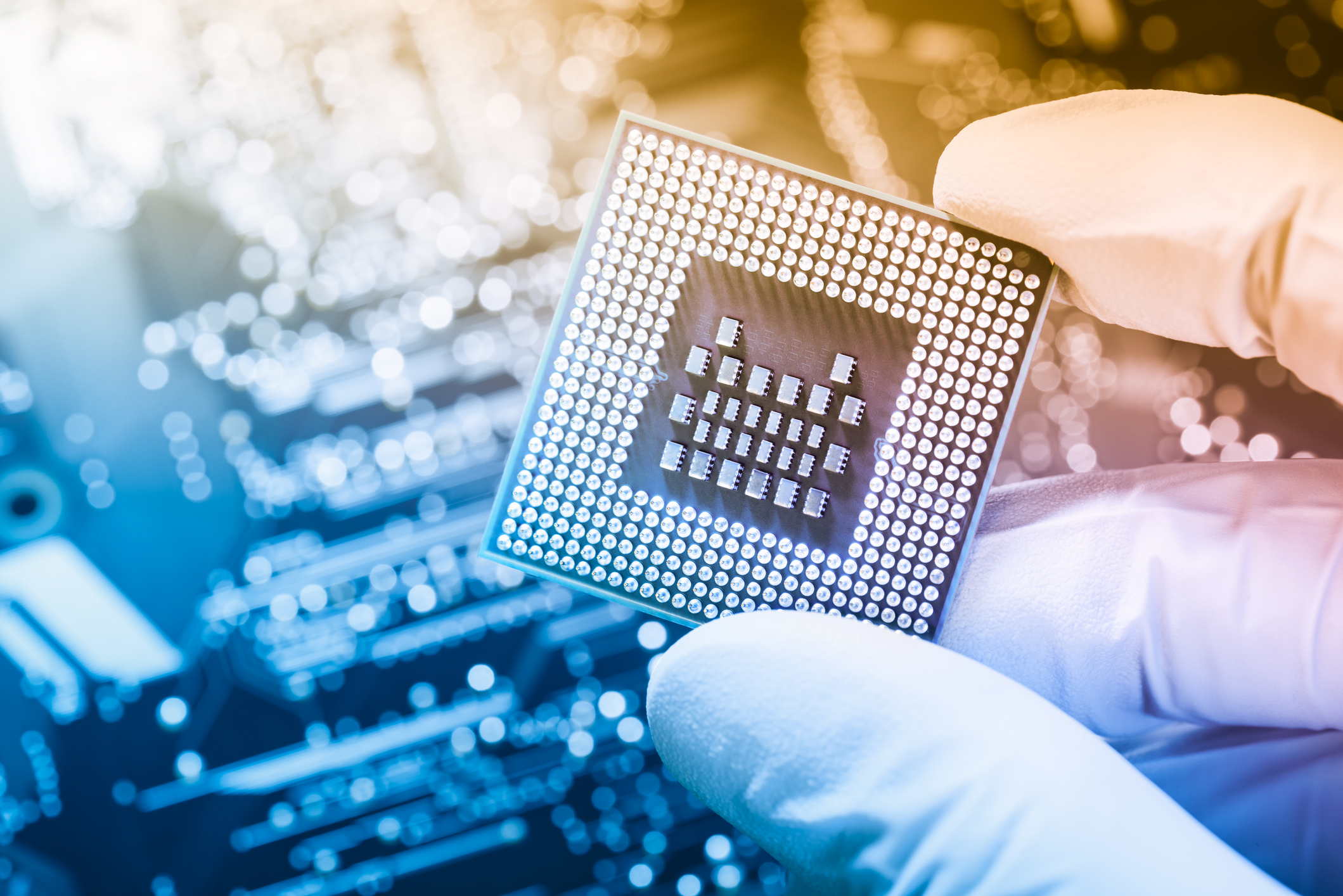
IT services major Tata Consultancy Services has entered into a partnership with the Indian Institute of Technology-Bombay, to develop what it said is India’s first quantum diamond microchip imager.
According to a statement from the IT services major on Tuesday, this to-be-developed sensing tool will hold the potential to unlock new levels of precision in the examination of semiconductor chips, reduce chip failures and improve the energy efficiency of electronic devices.
Over the next two years, experts from TCS will work with Dr Kasturi Saha, Associate Professor in the Department of Electrical Engineering of IIT-Bombay to develop the tool.
Semiconductor chips are an essential component of all modern electronic devices. These chips act as the brain of devices across industries such as communications, computing, healthcare, military systems, transportation, clean energy, and what not.
Professor Saha said, “By working together, we aim to transform various sectors, including electronics and healthcare, and propel India forward through ground-breaking technologies and products aligned with National Quantum Mission’s Quantum Sensing and Metrology vertical.”
Dr Harrick Vin, Chief Technology Officer, TCS, noted that the Second Quantum Revolution is progressing at an unprecedented speed, making it imperative to pool resources and expertise to build cutting-edge capabilities in sensing, computing, and communication technologies.
“We firmly believe this initiative will have a transformative impact on various industries and society, with applications ranging from electronics to healthcare, and beyond. By working together, we can drive innovation and create a brighter future for all,” said the CTO.
National Quantum Mission, an initiative of the central government, aims to position the nation as a global quantum technology leader.
As semiconductors continue to shrink in size, traditional sensing methods lack the precision and capabilities to detect anomalies in the chips, TCS asserted.
The to-be-developed Quantum Diamond Microchip Imager can image magnetic fields, enabling a non-invasive and non-destructive mapping of semiconductor chips, much like an MRI at a hospital.
It uses the defects in a diamond’s structure, known as Nitrogen-Vacancy (NV) centers, together with the other hardware and software for detecting and characterizing anomalies in semiconductor chips.
The semiconductor industry in India is still in a nascent stage, with various local and multinational companies intending to tap its vast potential.
Union Minister for Communications and Electronics and IT, Ashwini Vaishnaw, earlier this year said, that by the end of 2024, India would witness the launch of the first indigenous semiconductor chip.
Currently, four semiconductor units — three in Gujarat and one in Assam — are in under construction stage.
(ANI)