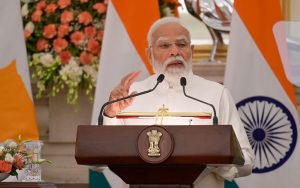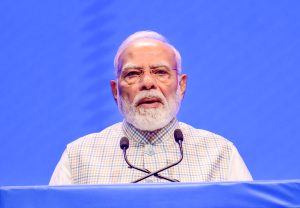







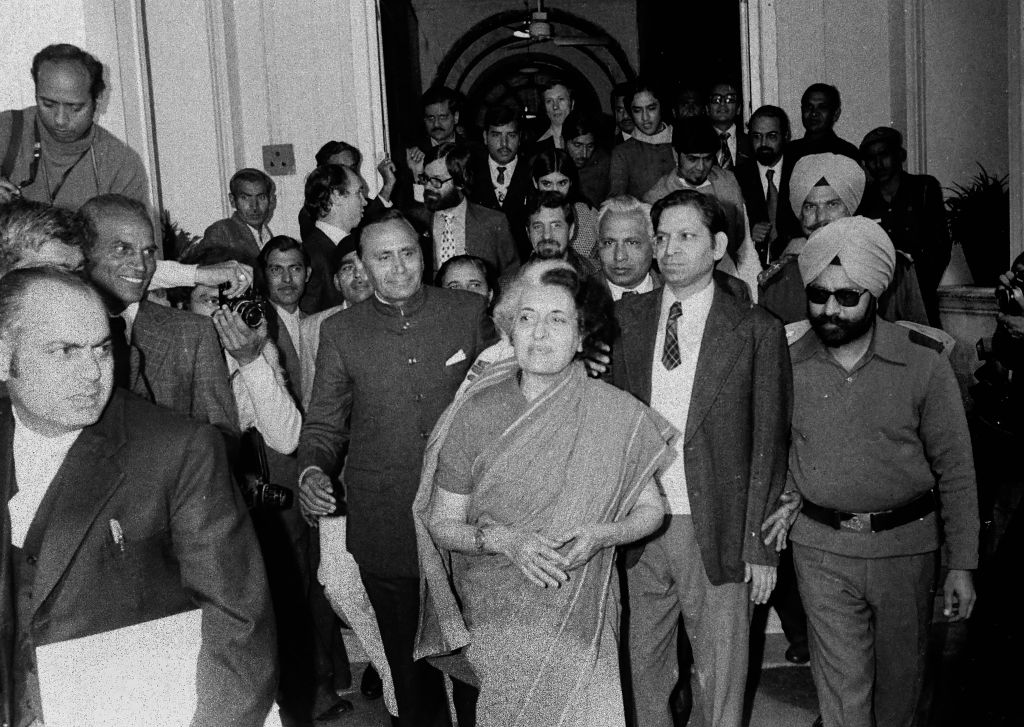
As the first session of the 18th Lok Sabha commenced on Monday, Prime Minister Narendra Modi recalled the “dark chapter” of the Emergency imposed by former PM Indira Gandhi 50 years ago to curb dissent.
“Tomorrow is the 25th of June. For those dedicated to upholding the dignity of our Constitution and who believe in Bharat’s democratic traditions, the 25th of June is an unforgettable day. Tomorrow marks 50 years since a dark chapter was written into India’s democracy,” PM Modi said
“The new generation of Bharat must never forget how the Constitution was completely disregarded, torn apart, and the country was turned into a prison, with democracy utterly suppressed.”
Other BJP leaders, such as Defence Minister Rajnath Singh, criticized the misuse of power and the blatant display of dictatorship during the Emergency, while party national president and Union Minister JP Nadda highlighted the sacrifices of those who resisted the authoritarian regime.
The Midnight Clampdown
On the night of June 25, 1975, Indira Gandhi’s government declared a nationwide Emergency. By dawn, non-Congress leaders across the country were arrested. Protests against Indira Gandhi erupted nationwide. From Hamirpur in Uttar Pradesh to the broader Bundelkhand region, the repercussions of this authoritarian decision were deeply felt. Movements and protests sprouted in response to the severe curtailment of civil liberties, with individuals and organizations braving severe repression.
The Beginning of the Emergency
The roots of the Emergency lay in the aftermath of the 1971 elections when Indira Gandhi defeated Raj Narain of the United Socialist Party. Accused of electoral malpractices and corruption, Indira Gandhi was found guilty by the Allahabad High Court on June 12, 1975, and barred from contesting elections for six years. This judgment triggered panic, leading to the imposition of the Emergency.
The Anti-Incumbency Wave
The Emergency lasted for 21 months, a period marked by severe curtailment of the rights and liberties of political opponents. The anti-incumbency wave that followed the Emergency led to significant electoral losses for Congress. Indira Gandhi suffered a stunning defeat in the 1977 general elections, with the newly emerged Janata Party voted to power. The elections were seen as a clear mandate against the curtailment of fundamental rights during the Emergency.
(With inputs from H.S.)