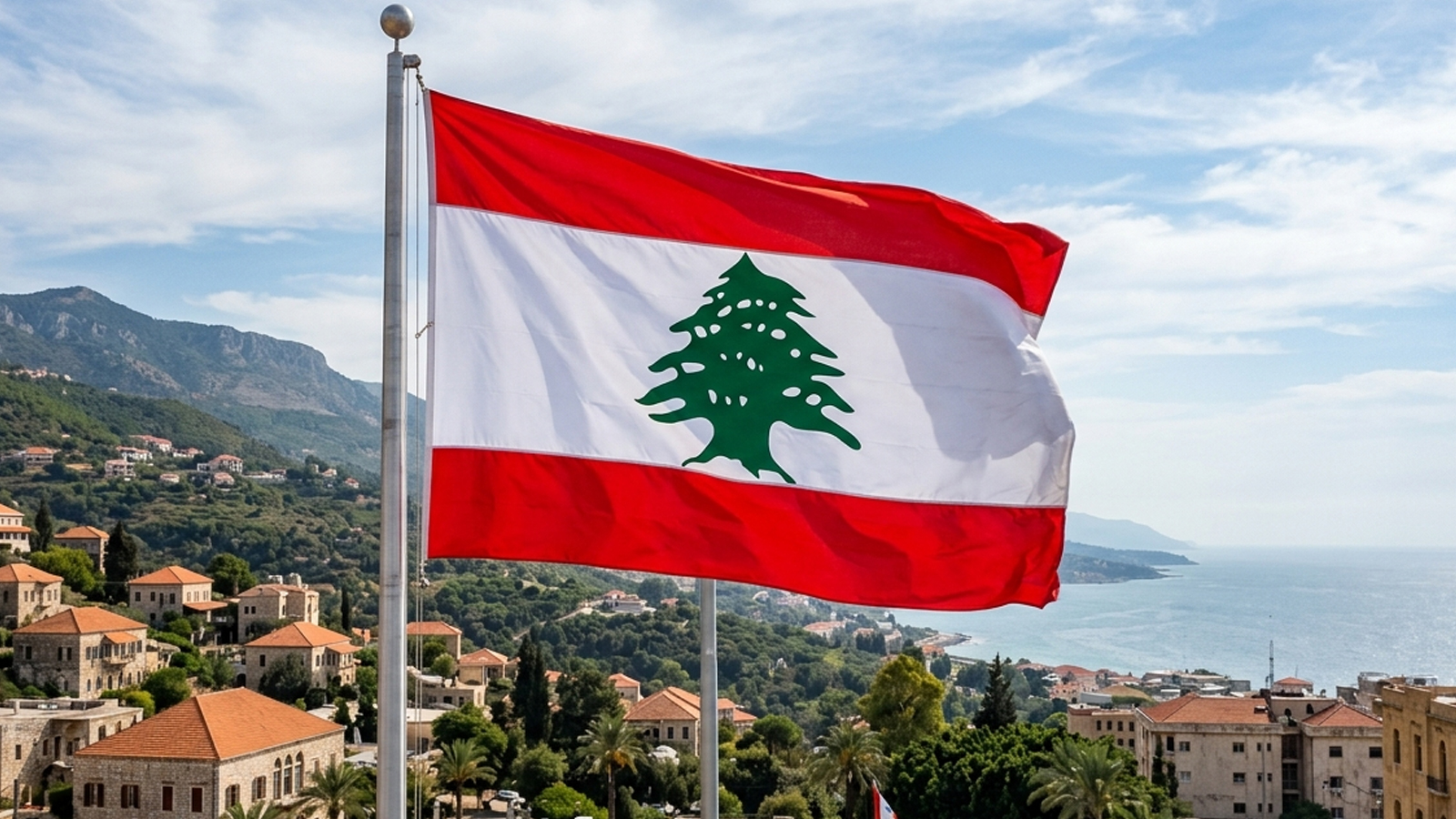
The United States-Iran memorandum of understanding that ended nearly four months of direct military conflict has the potential to reshape the strategic landscape of West Asia. While initial global attention focused on the immediate implications for Washington and Tehran, one of the most consequential developments concerns Lebanon. With the MoU explicitly demanding a permanent termination of hostilities on all fronts including Lebanon ,the future of Hezbollah, Israel’s security calculations, and the ability of the Lebanese state to regain authority have moved to the center of a new regional equation.
Throughout the conflict, Tehran positioned itself as the explicit guarantor of Lebanon’s red lines, repeatedly demanding an immediate halt to Israeli operations on Lebanese soil. This stance translated into direct military action on June 7, 2026. Following heavy Israeli bombardment campaigns targeting apartment buildings in Beirut’s southern suburbs earlier that day, Iran shattered the ceasefire by launching a massive barrage of retaliatory missile salvos directly at Israel. By entering the fray to strike back immediately when Beirut was hit, Iran sought to demonstrate that the security of Lebanon’s core command centers was tethered directly to its own regional deterrence framework, transforming the ‘Lebanon question’ into a highly volatile, direct clash between Iran and Israel.
The conflict that engulfed Lebanon following the Gaza war which began in October 2023 evolved into a confrontation far eclipsing the 2006 Lebanon war. Cross-border exchanges escalated into sustained, high-intensity military operations, resulting in widespread destruction across southern Lebanon and the significant displacement of civilians on both sides of the border. Israel’s stated objective was to degrade Hezbollah’s military infrastructure and push its forces away from the frontier. Hezbollah, meanwhile, sought to maintain pressure on Israel as a broader regional resistance strategy.
One of the defining features of the conflict was a series of high-profile targeted killings, executed through unprecedented intelligence penetration of Hezbollah’s command structure. Israel eliminated several senior military and political figures, famously leveraging unconventional methods, including widespread sabotage of pagers and walkie talkies. While these highly coordinated operations severely fractured the organization’s leadership network and exposed critical vulnerabilities, they did not trigger a total collapse. Despite experiencing profound structural losses, Hezbollah continued to function as both a military and political actor, using the operational resilience it has built over decades.
A major factor underlying the Lebanese question is the chronic weakness of the Lebanese state itself. Years of economic collapse, political paralysis, and institutional decay left Beirut largely incapable of controlling events on the ground. The Lebanese Armed Forces lacked the resources and political mandate to challenge Hezbollah directly, while successive governments struggled to address the country’s mounting social and economic crises. As a result, Lebanon became an arena where regional rivalries played out entirely beyond the control of its own sovereign institutions.
For Israel, the new US-Iran MoU presents both strategic opportunities and deep-seated concerns. On one hand, a reduction in direct Iranian-American hostilities could lower the risk of a wider regional war and diminish immediate logistical support for armed groups operating on Israel’s borders. On the other hand, many Israeli officials view the agreement as premature, arguing that intense military pressure was yielding definitive results against Iran and its proxies. Furthermore, since Israel is not a formal party to the US-Iran MoU, its principal interest remains uncompromised: preventing Hezbollah from rebuilding its military capabilities along the northern border and ensuring that Iran cannot use Lebanese territory as a platform for future confrontation.
The future of Hezbollah remains the most significant unanswered question. The movement faces a punishing strategic environment. Militarily, it has suffered historic setbacks. Politically, it must justify the staggering costs of the conflict to a Lebanese population already crushed by economic hardship. Yet Hezbollah retains deep roots within parts of Lebanese society and continues to possess substantial political influence. Its likely course is one of tactical adaptation rather than disappearance, focusing on rebuilding its degraded capabilities while aggressively preserving its position within Lebanon’s fractured political system.
The way forward depends on whether the US-Iran ceasefire can successfully pave the way for a lasting, localized Israel-Lebanon border agreement. For Lebanon, the immediate priority must be strengthening state institutions, reviving the economy, and restoring the government’s long-lost monopoly over the use of force. International support for reconstruction will be essential, but external financial assistance alone cannot solve Lebanon’s structural distortions.
Ultimately, the Lebanese question is not simply about Hezbollah or Israel. It is about whether Lebanon can finally emerge from decades of conflict, foreign intervention, and political fragmentation to become a truly stable and sovereign state. The new US-Iran understanding may create a fragile opening, but turning that opportunity into lasting peace will require historic political courage in Beirut, strategic restraint in Jerusalem, and a willingness among regional powers to prioritize structural stability over perpetual confrontation.