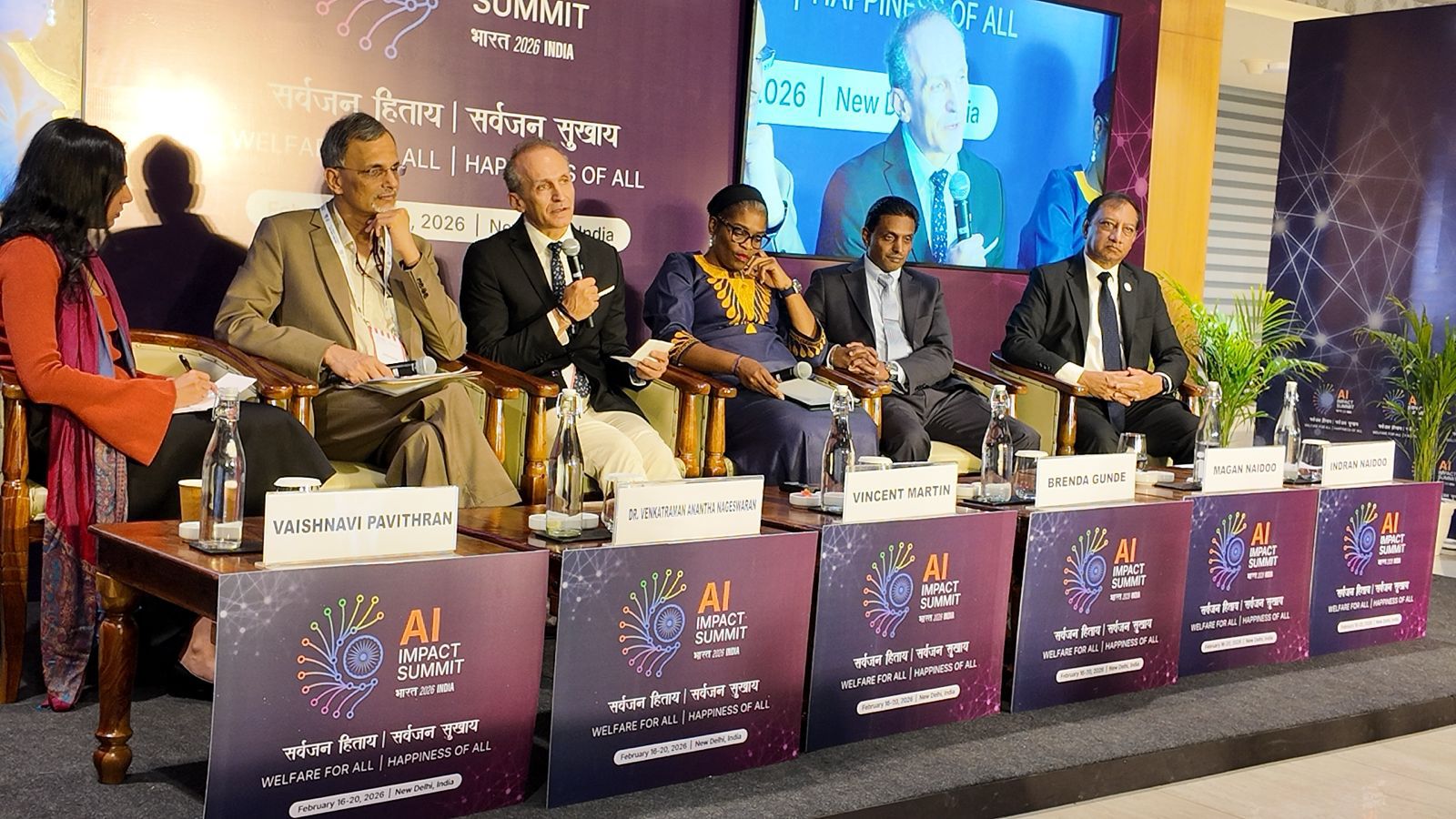
Global policymakers, development experts and technology leaders gathered at the India AI Impact Summit 2026 to explore how artificial intelligence can move beyond experimental pilot projects and become a scalable force for addressing some of the world’s most urgent challenges, including food insecurity, climate vulnerability and humanitarian crises.
A high-level panel titled “From Evidence to Scale: Testing, Financing and Operationalising AI for Development and Humanitarian Action” brought together representatives from three Rome-based United Nations agencies-the International Fund for Agricultural Development (IFAD), the Food and Agriculture Organization of the United Nations (FAO), and the World Food Programme (WFP)-along with India’s Chief Economic Advisor Dr. V. Anantha Nageswaran. The discussion focused on translating successful AI experiments into sustainable, large-scale development solutions.
Addressing the gathering, Dr. Nageswaran highlighted the importance of balanced policymaking, stressing that governments must both regulate and promote artificial intelligence to ensure it serves public welfare responsibly. Strong governance frameworks, he noted, are essential to unlock AI’s transformative potential while safeguarding ethical and inclusive use.
Experts emphasized that scaling AI requires more than technological innovation. Brenda Gunde of IFAD underlined the need for long-term investment not only in AI tools but also in digital public infrastructure, institutional capacity and governance systems. Inclusive financing, she said, is critical to ensure that smallholder farmers and rural communities benefit from digital transformation rather than being left behind.
From a humanitarian perspective, Magan Naidoo of WFP showcased how advanced AI systems are already improving emergency response operations. Through agentic AI and the organisation’s DEEP platform, WFP is automating complex decision-making processes related to food assistance, logistics and crisis coordination, enabling faster and more accurate delivery of aid to vulnerable populations.
The role of AI in evaluation and accountability was also highlighted. Indran Naidoo of IFAD explained that artificial intelligence is reshaping how development projects are assessed, allowing evaluators to analyse data more rigorously and better understand uncertainty and long-term impact.
Meanwhile, FAO’s Vincent Martin stressed that responsible AI begins with real-world problems rather than technology itself. He cited the LUMINA project in South Sudan, which uses AI to better understand and respond to acute child malnutrition, as an example of evidence-driven innovation moving toward scalable deployment.
The panel concluded that responsible governance, sustainable financing, and strong partnerships between governments, international organisations and local communities are essential for scaling AI solutions. With growing collaboration between India and global development institutions, participants expressed optimism that artificial intelligence can play a decisive role in building resilient food systems and supporting vulnerable populations worldwide.