







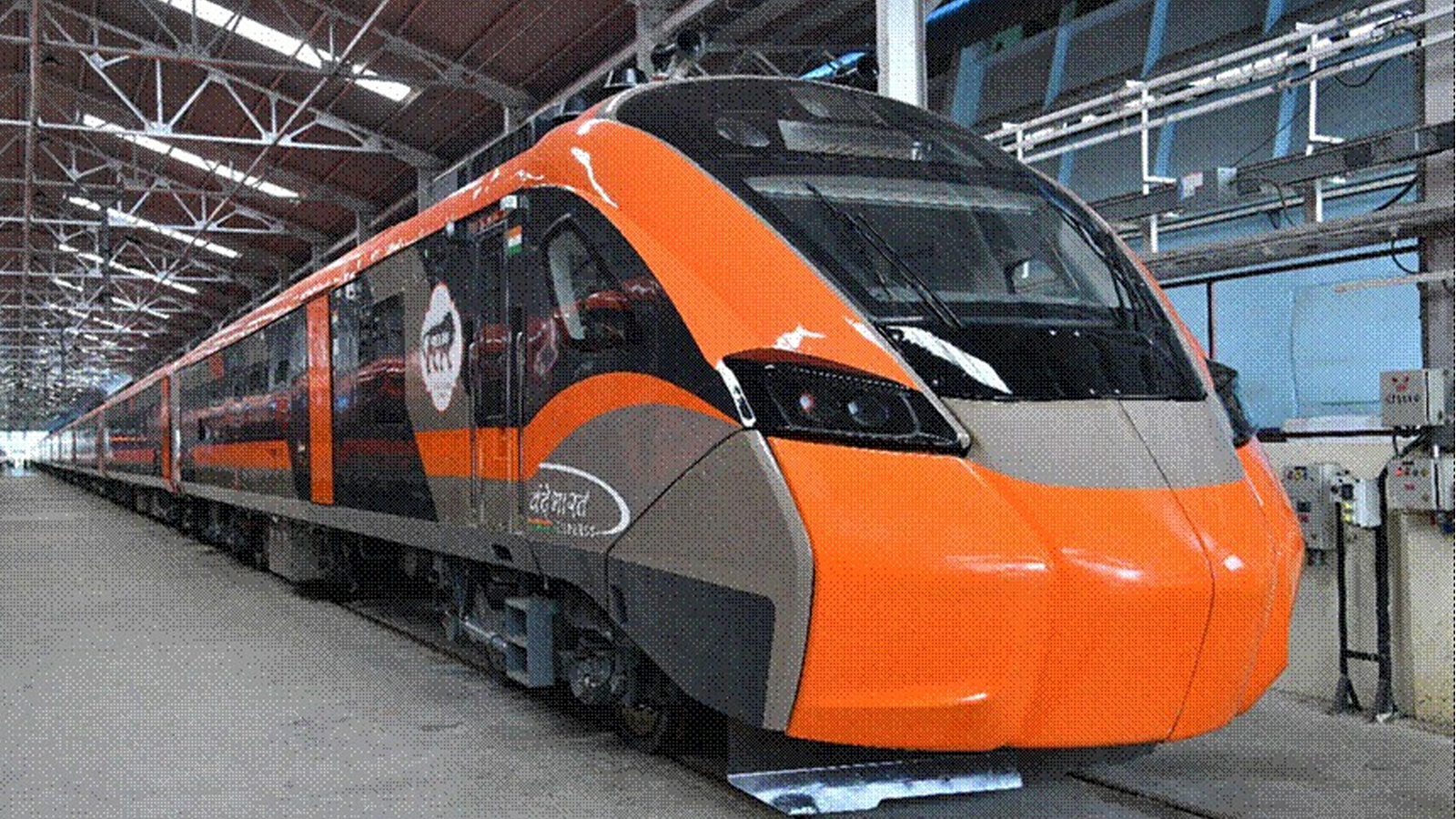

Indian Railways has successfully completed the final high-speed trial of the indigenously developed Vande Bharat Sleeper Train under the supervision of the Commissioner of Railway Safety (CRS). The trial was conducted on the Kota-Nagda section, where the 16-coach train achieved a maximum speed of 180 kmph, marking a significant step in India’s push for advanced and self-reliant rail technology.
During the trial, the CRS carried out detailed technical assessments covering ride stability, oscillation and vibration behaviour, braking and emergency braking performance, and the functioning of safety systems. The Ministry of Railways said the train’s performance at high speed was found to be fully satisfactory, and the trial was declared successful.
Union Minister for Railways Ashwini Vaishnaw shared a video of the trial on social media, highlighting the successful CRS certification run. The footage included a water-glass stability demonstration, in which glasses filled with water remained steady without spillage even at high speeds, indicating the train’s advanced suspension system and improved ride quality.
The Vande Bharat Sleeper Train has been designed to meet the requirements of long-distance travel and offers a range of modern passenger amenities. These include comfortable sleeper berths, automatic doors, modern toilets, advanced suspension, fire detection and safety monitoring systems, CCTV-based surveillance, digital passenger information systems and energy-efficient technologies. The features are aimed at providing safer, smoother and more comfortable overnight journeys.
In terms of safety and technology, the train is equipped with the indigenous KAVACH train protection system, crashworthy semi-permanent couplers with anti-climbing features, and fire barrier doors at the end of each coach. Fire safety has been enhanced through aerosol-based fire detection and suppression systems in electrical cabinets and lavatories. The rake also features regenerative braking for improved energy efficiency and air-conditioning units fitted with UV-C lamp-based disinfection systems.
Passenger safety and convenience have been further strengthened with centrally controlled automatic plug doors, fully sealed wider gangways, CCTV cameras in all coaches and an emergency talk-back system that allows direct communication between passengers and the train manager or loco pilot in case of emergencies. Special lavatories have been provided in the driving coaches at both ends for Divyangjan passengers, while a centralised coach monitoring system enables real-time monitoring of amenities such as air-conditioning and lighting. The sleeper coaches also feature ergonomically designed ladders for easier access to upper berths.
The successful completion of the CRS high-speed trial is a major technical milestone and clears the way for the introduction of Vande Bharat Sleeper services on Indian Railways. The Ministry said the development reflects the Railways’ focus on innovation, passenger safety and indigenous manufacturing in line with the Atmanirbhar Bharat vision.