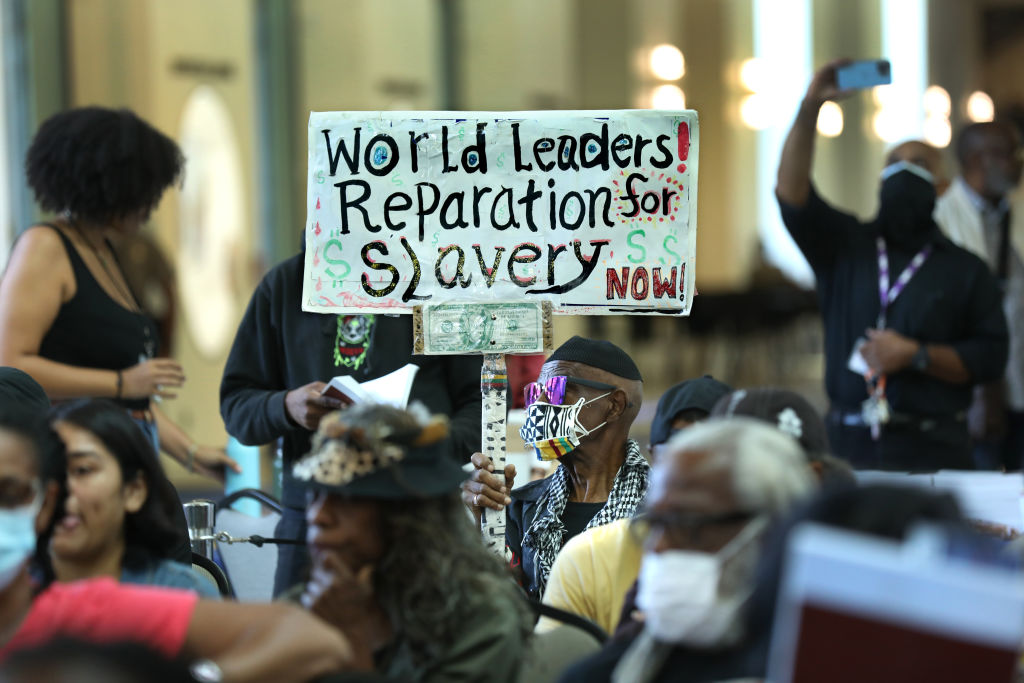
Discussions on reparations for transatlantic slavery and colonialism are gaining momentum, with Caribbean and African nations calling on former colonial powers to engage on the issue.
From the 15th to the 19th century, at least 12.5 million Africans were kidnapped, forcibly transported by mostly European merchants and sold into slavery.
Proponents of reparations say slavery’s legacy has caused persistent racial inequalities while opponents say countries shouldn’t be held responsible for historical wrongs.
Caribbean nations have urged European countries to formally apologise, cancel debt and provide support for educational, health and cultural programmes, as part of its reparation plan.
The African Union is developing its own plan.
Here is where some former European colonial powers and the United States stand on reparations.
BRITAIN
Britain transported an estimated 3.2 million people, the most active European country after Portugal.
King Charles expressed deep sorrow over slavery in a speech to Commonwealth leaders in 2022 and has welcomed research that will examine the monarchy’s links to slavery.
Former Labour Prime Minister Tony Blair also said he was “sorry” for his country’s role in slavery during a 2007 news conference with Ghana’s former President John Kufuor. The Caribbean Community CARICOM calls for a “full formal apology”.
But consecutive British governments, like most former colonial powers, have rejected calls for reparations.
Some campaigners hoped the new Labour government of Prime Minister Keir Starmer would be open to reparations, but Starmer has said he would like to “look forward” rather than have “very long, endless discussions about reparations on the past”.
PORTUGAL
Portugal trafficked nearly 6 million Africans.
Little is taught about its role in slavery in schools and Portugal’s colonial era is often perceived as a source of pride.
Portugal’s President Marcelo Rebelo de Sousa said in 2023 his country should apologise for slavery and colonialism but stopped short of a full apology.
He said last year that Portugal was responsible for crimes committed during slavery and the colonial era, and suggested there was a need for reparations, sparking a national debate and criticism from right-wing parties.
The government said it would not initiate any reparation process.
NETHERLANDS
Dutch King Willem-Alexander and former prime minister, Mark Rutte, have both apologised for the Netherlands’ historic involvement in slavery, with Rutte acknowledging the Dutch state profited from it.
The government has ruled out reparations, instead setting up a 200 million euro fund to benefit descendants of enslaved people and other groups, and promote social initiatives in the Netherlands, the Dutch Caribbean and Suriname.
Activists have questioned the sincerity of apologies since the issue of reparations has not been addressed. The Netherlands trafficked around half a million people.
The Kingdom of the Netherlands still comprises several Caribbean islands, including Aruba and Sint Maarten.
Advocates have said apologies were “incomplete” if the islands remained part of the kingdom.
FRANCE
France trafficked an estimated 1.3 million people to the Americas, including the Caribbean.
In 2001, France officially recognised transatlantic slavery as a crime against humanity. In 2017, President Emmanuel Macron ruled out reparations, calling for “reconciliation” instead.
France’s highest court last year rejected a call for reparations to be paid to the descendants of those enslaved in a case that originated on the Caribbean island of Martinique.
A coalition of civil society groups said in April France should repay billions of dollars in reparations to Haiti to cover a debt formerly enslaved people were forced to pay in return for recognising the island’s independence.
BELGIUM
Belgium’s King Philippe reaffirmed in 2022 his regrets for the exploitation, racism and acts of violence during his country’s colonisation of the Democratic Republic of Congo, but stopped short of formally apologising.
By some estimates, killings, famine and disease caused the deaths of up to 10 million Congolese during just the first 23 years of Belgium’s rule from 1885 to 1960, when King Leopold II ruled the Congo Free State as a personal fiefdom.
Belgium has traditionally said little about colonialism, and the subject has not been extensively taught in Belgian schools.
During anti-racism protests sparked in 2020 by the police killing in the United States of George Floyd, demonstrators targeted statues of King Leopold II.
In 2020, a parliament-ordered commission examined Belgium’s colonial past, which also included the occupation of Rwanda and Burundi. It did not reach a conclusion on reparations.
SPAIN
Public debate on reparations is marginal in Spain but representatives of several NGOs have called for it, from the Spanish government and from companies and private fortunes that benefited from slavery and colonisation.
In 2019, then-Mexican President Andres Manuel Lopez Obrador sent a letter to Spain’s King Felipe and Pope Francis requesting they apologise to Mexico’s indigenous peoples for abuses committed during the Spanish conquest. Madrid did not reply but said it “firmly rejected” its content.
On Oct. 14, Venezuela’s Nicolas Maduro said that his country, along with other Latin American nations, intended to “make a profound claim” for Spain to pay reparations for “the theft and plundering of our lands as well as the slavery and suffering endured by our indigenous and African grandparents”.
UNITED STATES
At the federal level, a proposal to create a commission to study what reparations might look like has been stalled in Congress for 35 years.
California state legislators passed bills addressing the legacy of slavery and racial discrimination but Governor Gavin Newsom vetoed last month the most ambitious of the reparations proposals.
A U.S. State Department spokesperson said the country “strongly supports” the U.N. Permanent Forum on People of African Descent, which has called for the creation of an international tribunal on reparations.
President Joe Biden said in 2021 he supported a study on whether descendants of enslaved people in the United States should receive reparations.
(Reuters)