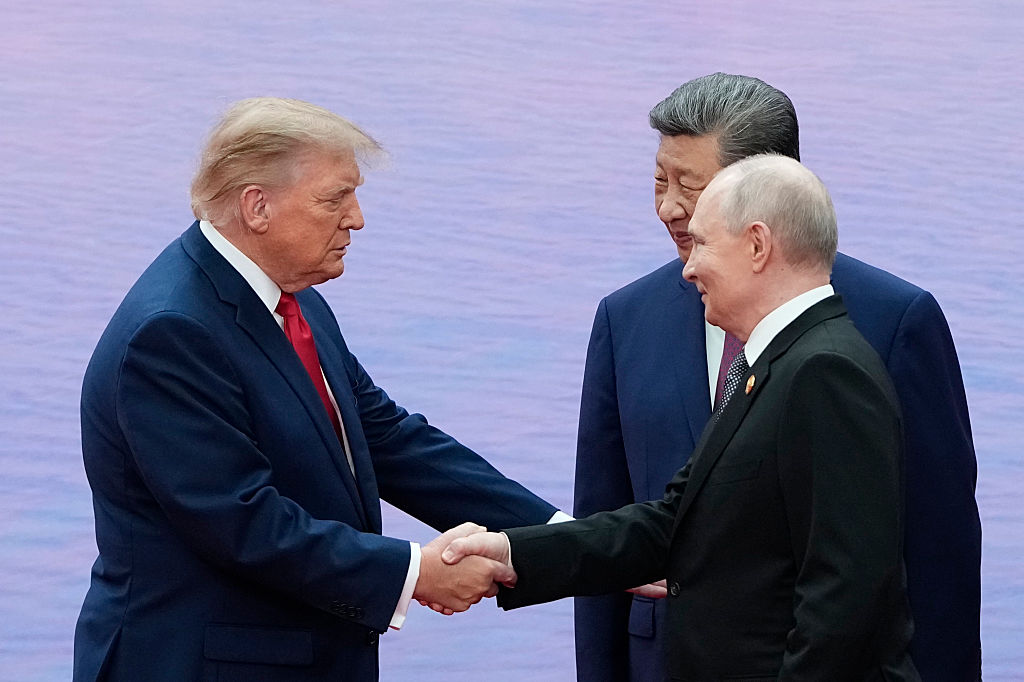
US President Donald Trump on Thursday held bilateral talks with Russian President Vladimir Putin on the sidelines of the 33rd Asia-Pacific Economic Cooperation (APEC) Economic Leaders’ Meeting in Shenzhen, China, expressing optimism about the outcome of their discussions.
Welcoming Putin, Trump said he expected the meeting to produce positive results and indicated that another round of discussions would take place later.
“We look forward to our meeting. We’ve had a great relationship for many years. We have known each other for a long time. I think a lot of wonderful things can come out of this, or at least start. But I think they’ll come out of this. We’ll have a second meeting later on, which you probably know. But we’ll have this right now, and it’s going to be great,” Trump said.
The meeting comes amid heightened diplomatic activity in Shenzhen, where leaders of the United States, China and Russia are attending the APEC summit and are expected to participate in a trilateral engagement.
Earlier, Trump had expressed optimism about his proposed meeting with Putin and Chinese President Xi Jinping, describing it as a historic opportunity to explore areas of common interest among the three major powers.
“And here in China, I look forward to a historic trilateral meeting with President Xi and President Putin later today to discuss more opportunities for all three. So, we look forward to that, very much forward to that,” Trump said.
The proposed trilateral discussions are expected to cover several key international issues, including nuclear disarmament, the conflict involving Iran, global trade and the ongoing Russia-Ukraine war.
Ahead of Trump’s arrival, Xi and Putin held bilateral talks in Shenzhen, reaffirming their strategic partnership and commitment to advancing a multipolar world order.
Xi described China-Russia relations as standing “as firm as a mountain amid wind and rain”, while Putin said political cooperation between the two countries remained constructive despite the challenging international situation.
The proposed trilateral engagement also comes amid renewed attention to global arms control following the expiration of the US-Russia New START treaty earlier this year. Washington has sought to bring Beijing into broader nuclear arms reduction discussions, although China has traditionally resisted direct negotiations, citing the significantly larger nuclear arsenals maintained by the United States and Russia.
(ANI Inputs)