











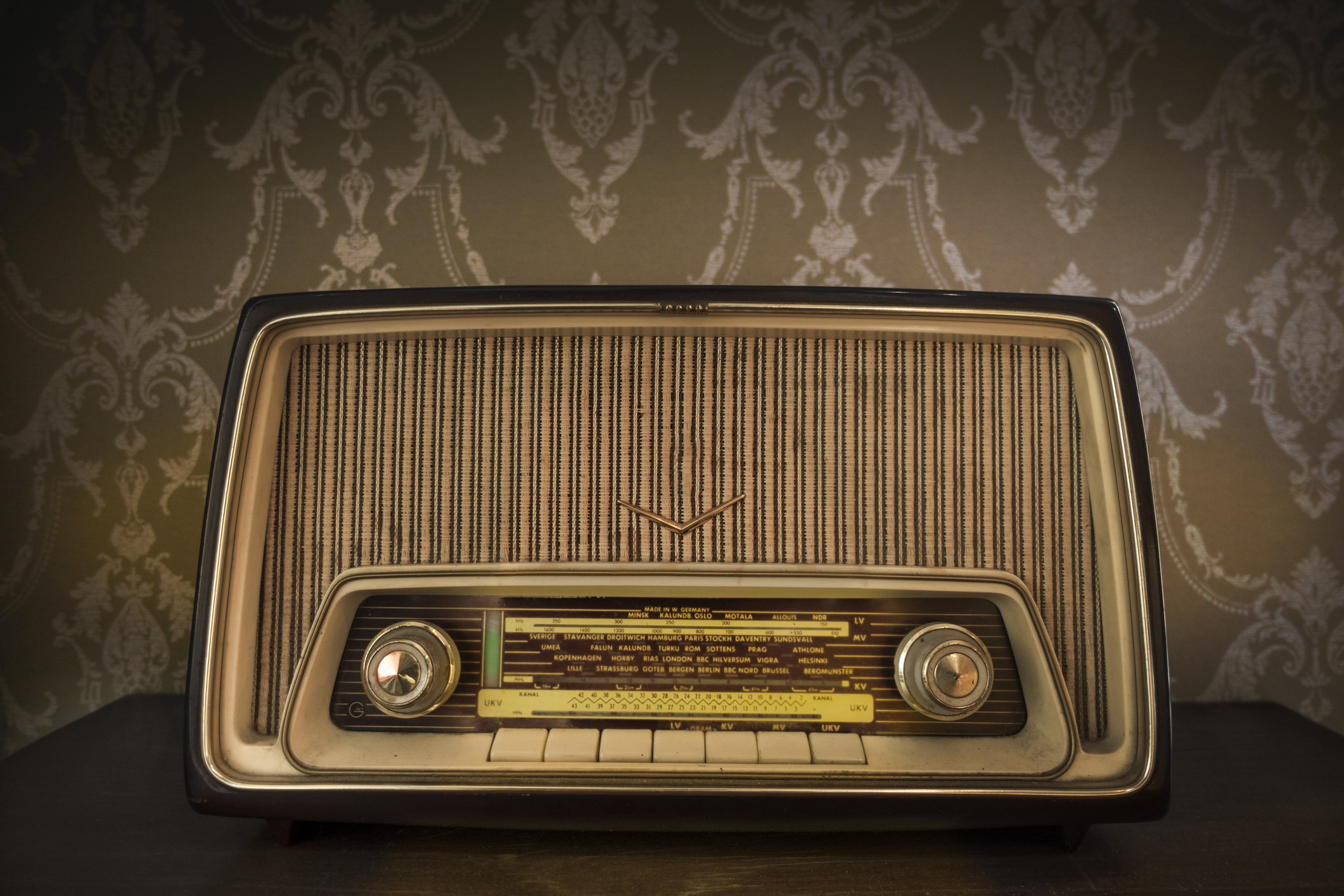
India will observe World Radio Day 2026 on February 13, marking the establishment of United Nations Radio in 1946 and reaffirming radio’s continued relevance as a public service medium. World Radio Day was proclaimed by UNESCO at its 36th General Conference in 2011 and adopted by the United Nations General Assembly during its 67th session in 2012, making it an officially recognised international observance held annually on February 13.
Radio has played a central role in public communication, carrying information across geographies, languages and communities. One of the most significant moments associated with radio in India remains the night of August 14–15, 1947, when broadcasts announced Independence and connected the nation through a shared moment of history.
The theme for World Radio Day 2026, “Radio and Artificial Intelligence: AI is a tool, not a voice,” focuses on the growing use of artificial intelligence in broadcasting while emphasising that editorial judgement, credibility and the human voice must remain central. The theme highlights AI’s role in supporting content production, archiving, translation, audience engagement and accessibility, while underlining the need for ethical use so that technology strengthens, rather than replaces, radio’s core values.
To mark the occasion, All India Radio (AIR), Raipur, in collaboration with UNESCO, will organise a World Radio Day Conclave on February 13 in Raipur, Chhattisgarh. The conclave will examine how artificial intelligence can enhance content creation, audience engagement and accessibility while preserving the human element of broadcasting.
All India Radio, also known as Akashvani, operates under Prasar Bharati as India’s public service broadcaster with the motto “Bahujan Hitaya, Bahujan Sukhaya.” Established in 1936 and brought under public ownership after Independence, AIR today runs 591 broadcasting centres, covering nearly 92 per cent of India’s geographical area and 99.19 per cent of its population. It broadcasts in 23 languages and 182 dialects through medium wave, short wave, FM and digital platforms, reaching urban, rural and border regions.
AIR’s programming includes news, current affairs, agriculture, education, health awareness and cultural content, and it has played a key role during emergencies and natural disasters by providing verified information. During the COVID-19 pandemic, students in rural Bihar, Jharkhand and parts of Madhya Pradesh relied on AIR’s educational broadcasts when schools were closed and digital access was limited. In coastal regions of Odisha and Tamil Nadu, fishermen regularly depend on AIR weather bulletins, including during cyclones such as Fani in 2019.
Private FM radio continues to expand local outreach. In August 2024, the Union Cabinet approved 730 new FM channels across 234 previously uncovered cities and towns at a reserve price of ₹784.87 crore. According to the Ministry of Information and Broadcasting, 391 private FM channels are currently operational in 119 cities under the FM Phase-III policy.
Community Radio Stations form the third tier of broadcasting in India. The policy for granting community radio licences was approved in 2002, and the first Community Radio Station was inaugurated on February 1, 2004, by then Union Home Minister and Deputy Prime Minister Lal Krishna Advani. Anna Community Radio (90.4 MHz) was launched in 2005. India now has 528 Community Radio Stations broadcasting in local languages and dialects, focusing on health, education, agriculture, social development and cultural preservation.
Radio has also gained strategic importance in remote and border areas. The Indian Army launched “Ibex Tarana 88.4 FM” in Jyotirmath, Uttarakhand, in June 2025, followed by “Radio Sangam 88.8 FM” in Rajouri, Jammu and Kashmir, in January 2026, the first community radio station along the Line of Control.
Radio remains critical during emergencies when electricity, internet or mobile networks fail. Community initiatives across Bundelkhand, Kutch, Uttarakhand and Tihar Jail use radio for education, cultural preservation, rehabilitation and public awareness. In metropolitan cities such as Delhi and Mumbai, FM radio continues to be part of daily urban life through traffic updates, music and interactive programmes.
Prime Minister Narendra Modi’s Mann Ki Baat further underlines radio’s relevance in the digital age. Launched on October 3, 2014, the monthly programme is broadcast on All India Radio in multiple languages and has completed 130 editions, reaching remote regions and highlighting grassroots initiatives, social movements and cultural traditions.
Reflecting radio’s cultural legacy, Ram Singh Bouddh of Gajraula in Amroha district, Uttar Pradesh, known as the “Radio Man of India,” was recognised by Guinness World Records in 2025 for owning the world’s largest collection of radios, comprising 1,257 sets. His collection is housed in a museum at Siddharth Inter College managed by his family.







