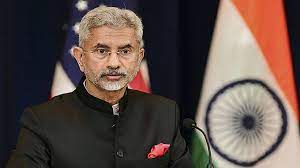
He emphasized that providing dual citizenship to Indians residing abroad poses various economic and security challenges. Despite ongoing debates, Jaishankar acknowledged the importance of addressing this issue.
He highlighted the Overseas Citizenship of India (OCI) campaign as a step towards fulfilling the demand for dual citizenship. The OCI program aims to facilitate individuals with Indian roots residing in countries other than Pakistan and Bangladesh. This initiative allows OCI cardholders to enjoy multiple-entry lifelong visas for India, along with certain rights akin to Indian citizens. However, limitations exist, as OCI cardholders do not have the right to vote in Indian elections or run for legal or constitutional offices in the country.
Understanding Dual or Multiple Citizenship:
Dual or multiple citizenship refers to the legal status granted to individuals who hold citizenship in two or more countries simultaneously. Such individuals have the privilege to participate in the political affairs of both countries, obtain visa exemptions for travel, and engage in employment in either nation. They are also entitled to possess passports from both countries, along with enjoying social and legal rights equivalent to other citizens. Some countries, like the United States, Finland, Albania, Israel, and Pakistan, allow dual citizenship with certain legal provisions, ensuring that both nations permit the retention of dual nationality.
Dual Citizenship in India:
The Indian Constitution does not permit its citizens to hold citizenship in another country simultaneously. However, the Indian government runs the OCI program for Persons of Indian Origin (PIO), excluding those in Pakistan and Bangladesh. While an OCI cardholder can benefit from multiple-entry lifelong visas and certain privileges in India, they do not have the right to vote or contest elections in the country.
It's important to note that OCI cardholders lack voting rights and cannot run for legal or constitutional offices in India.
In conclusion, the discourse on dual citizenship in India continues to evolve, with challenges in economic and security domains. The OCI initiative addresses some aspects of this demand, but the debate persists, reflecting the complex nature of citizenship policies in a globalized world.