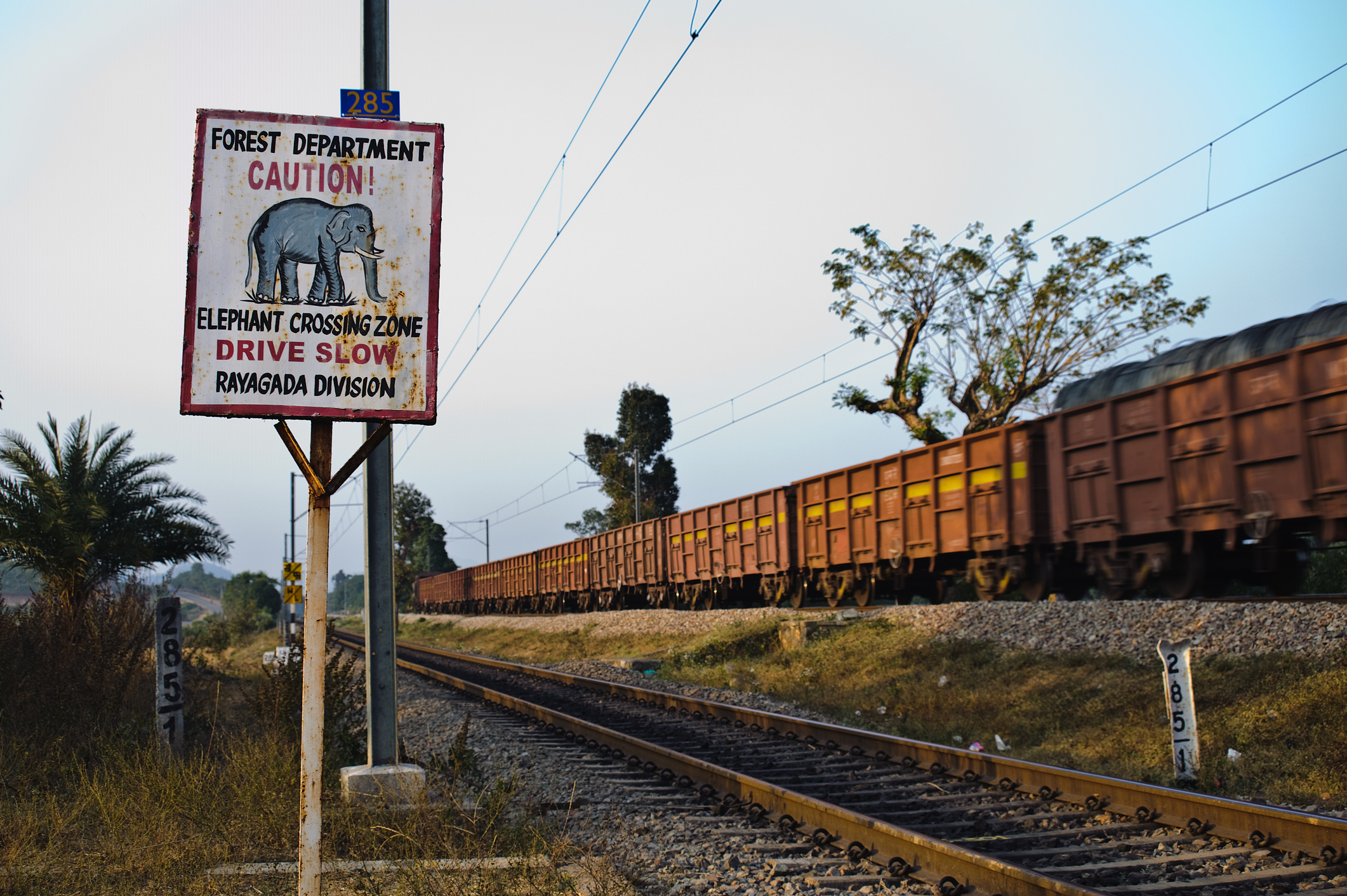
The Ministry of Environment, Forest and Climate Change (MoEFCC) has identified 77 railway stretches across 14 states as priority areas for mitigation measures aimed at reducing elephant deaths caused by train collisions.
The decision follows a two-day national workshop on “Policy Implementation for Minimizing Elephant Mortalities on Railway Tracks”, organised by the Project Elephant Division of the ministry in collaboration with the Wildlife Institute of India (WII) in Dehradun on March 10 and 11.
The workshop brought together around 40 participants, including officials from the Ministry of Railways, state forest departments from elephant-range states, conservation scientists and representatives from multiple railway zones.
According to the ministry, India is home to more than 60 per cent of the global Asian elephant population. However, expanding railway infrastructure and habitat fragmentation have increased incidents of elephant deaths on railway tracks in states such as Assam, West Bengal, Uttarakhand, Odisha, Tamil Nadu, Karnataka, Kerala, Chhattisgarh and Jharkhand.
Officials said 110 sensitive railway stretches across elephant habitats and 17 additional stretches in two tiger-range states were identified through joint assessments conducted by Project Elephant, WII, Indian Railways and state forest departments.
Field surveys covering 127 railway stretches and about 3,452.4 km of track led to the prioritisation of 77 stretches spanning 1,965.2 km for mitigation based on wildlife movement patterns and collision risk.
The mitigation plan proposes 705 structures to facilitate safe wildlife passage. These include 503 ramps and level crossings, 72 bridge extensions or modifications, 39 fencing or trenching structures, four exit ramps, 65 underpasses and 22 overpasses.
Wildlife-friendly infrastructure is also being incorporated in several new and expanded railway projects. These include the Gevra Road–Pendra Road railway line in Chhattisgarh passing through the Achanakmar-Amarkantak elephant corridor, the Darekasa–Salekasa track tripling project and the Nagbhid–Itwari gauge conversion project in Maharashtra, and the Wadsa–Gadchiroli railway line intersecting the Kanha–Navegaon–Tadoba–Indravati tiger corridor.
A major intervention is planned along a 3.5-km sensitive stretch of the Azara–Kamakhya railway line in Assam that cuts across the Rani–Garbhanga–Deepor Beel elephant corridor, where several elephant deaths have been recorded. The section is proposed to be elevated to allow safe elephant movement across the corridor.
Authorities are also testing technology-based systems to prevent wildlife–train collisions. A Distributed Acoustic System (DAS)-based intrusion detection system has been installed in four sections under the North East Frontier Railway in Assam, covering 64.03 km of elephant corridors and 141 km of railway block sections. The system is being expanded to parts of North Bengal and Odisha.
Another pilot initiative in Madukkarai in Tamil Nadu uses an AI-based early warning system with thermal and motion-sensing cameras mounted on 12 towers. The system detects elephant movement within 100 metres of railway tracks and alerts railway and forest officials so trains can slow down and allow animals to cross.
Participants at the workshop discussed factors contributing to collisions, including habitat fragmentation, land-use changes, train speeds, night operations and seasonal elephant movements. Regional working groups examined mitigation strategies across major elephant landscapes, including the Shivalik-Gangetic Plains, Central India and Eastern Ghats, the North-East and the Western Ghats.
The workshop emphasised the need for stronger coordination between railway authorities, forest departments and scientific institutions, along with standardised protocols for risk assessment, monitoring and rapid response.
Experts also called for expanded early warning systems, dedicated wildlife crossings, improved signage and better data sharing, while identifying research priorities such as AI-based detection systems and remote sensing tools to reduce elephant-train collisions.