






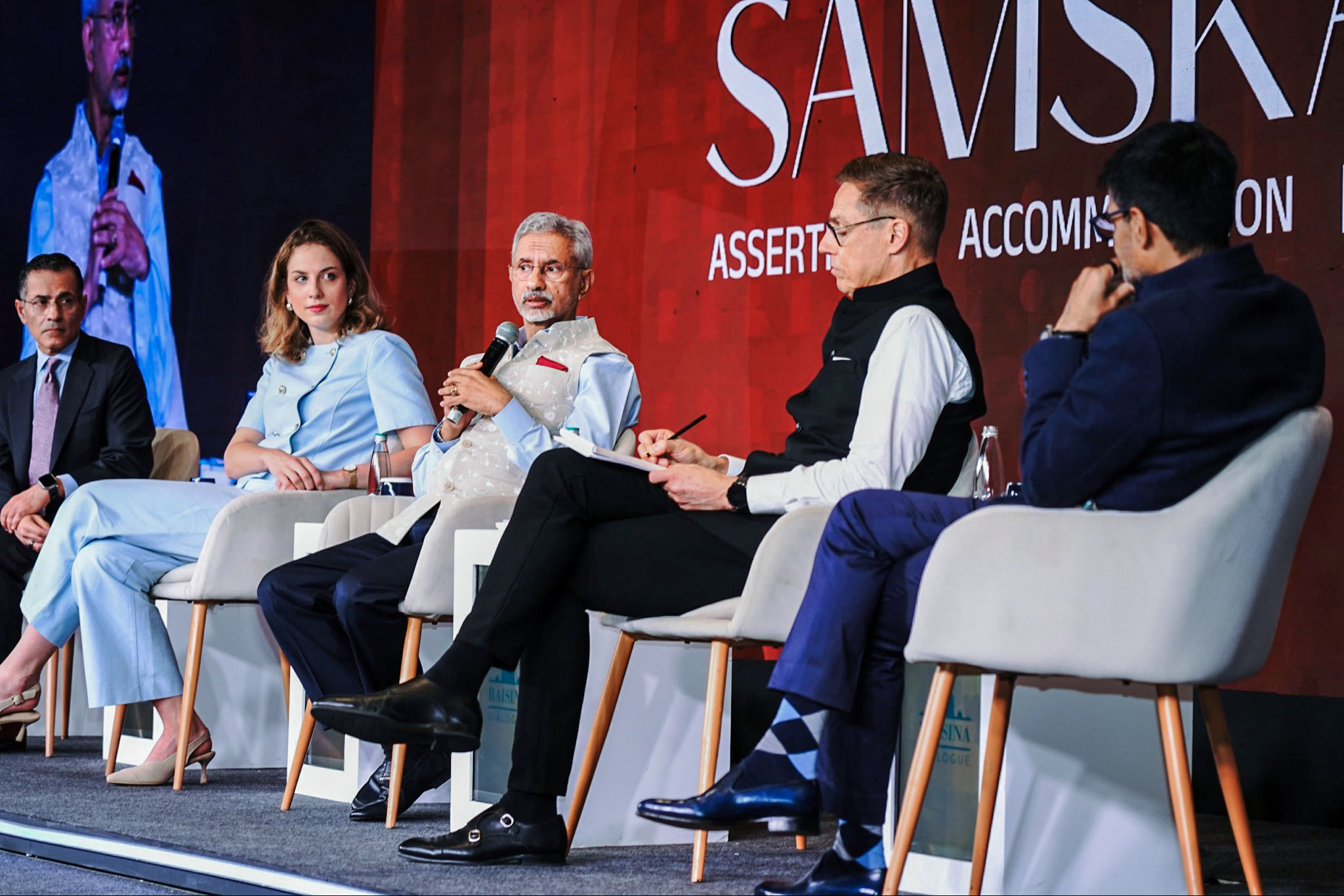
External Affairs Minister S. Jaishankar has said that the era when a few dominant powers could shape global decisions through major agreements is over, asserting that multipolarity has become an irreversible feature of the international system.
Speaking at the Raisina Dialogue 2026 in New Delhi, Jaishankar said global power is now distributed across several regions, making it difficult for a small group of countries to dictate outcomes for the rest of the world.
He noted that India’s actions during the COVID-19 pandemic, particularly its decision to supply vaccines to developing countries even while managing its own vaccination programme, demonstrated the real significance of the Global South.
“When COVID happened, the fact that a country like India, which was still undergoing its vaccination programme, was willing to send vaccines to countries of the Global South showed that the Global South is real because it meant something for us,” Jaishankar said.
He added that the concept of the Global South is rooted in shared historical experiences and collective challenges faced by developing nations.
According to the Minister, the traditional idea of a unified Global West has also begun to evolve in recent years.
“I think the Global West was probably a more unified term — culturally, politically and strategically — until recently. Now there is a differentiation within the Global West,” he observed.
Highlighting broader changes in global politics, Jaishankar said the world has moved beyond a system where a few powerful nations could reach major agreements and expect the rest of the world to follow.
“Multipolarity is here to stay. What we will see is that some of the bigger countries may form temporary partnerships on specific issues. But structurally, there will not be some big deal between powers that the rest of the world simply has to accept. That era is over,” he said.
Jaishankar also emphasised that the future of global cooperation will depend on adapting to this evolving distribution of power rather than attempting to reverse it.
He said multipolarity and multilateralism can coexist, and global cooperation should not depend on weakening the multipolar nature of the international system.
“If multipolarity is here to stay, the issue is not that it is against multilateralism. You can have multipolarity with multilateralism and multipolarity without multilateralism,” he added.
-ANI