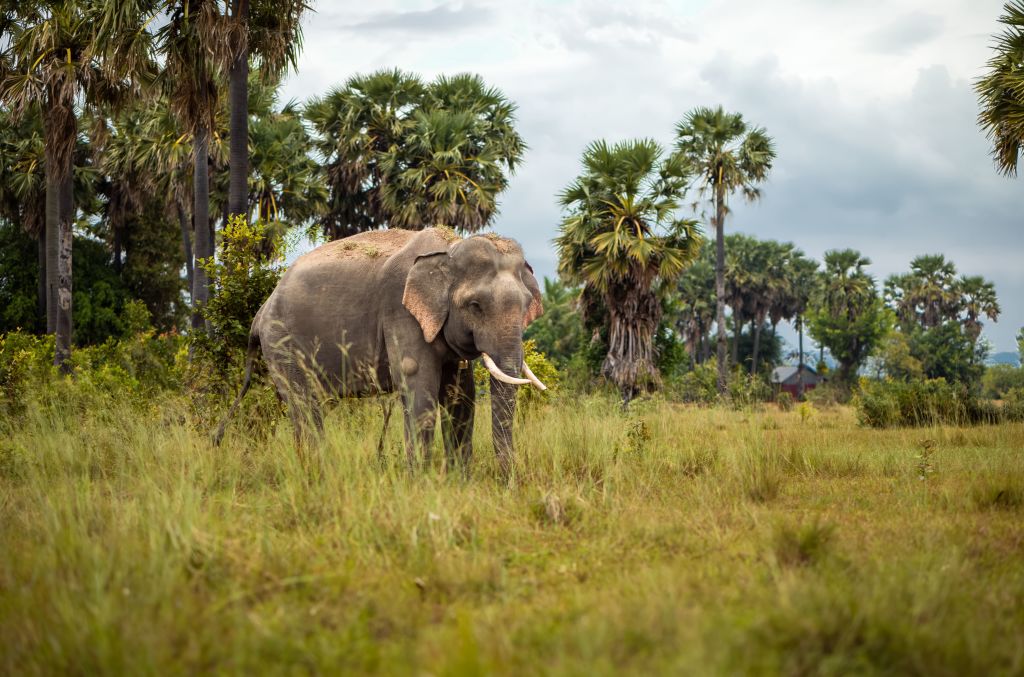
The first-ever genetic study of endangered Asian elephants in Cambodia’s northern plains has estimated the population of these mammals in the region at 51, according to a press release from Fauna & Flora Cambodia on Thursday.
Conducted by Fauna & Flora in collaboration with the Ministry of Environment, the study was carried out during the 2020-2021 dry season and utilized non-invasive genetic sampling techniques across three key protected areas: Prey Lang, Preah Roka, and Chhaeb Wildlife Sanctuaries, the press release stated.
The genetic research was performed at the Royal University of Phnom Penh with technical support from the Royal Zoological Society of Scotland.
“The researchers estimated a population of 51 elephants in the region, larger than previous local estimates suggested,” the press release noted.
Although smaller than Cambodia’s primary elephant populations in the Cardamom Mountains and Eastern Plains, which support 200-300 individuals, the Prey Lang Extended Landscape population exhibits high genetic diversity— a critical factor for long-term viability, it added.
Listed as endangered on the International Union for Conservation of Nature (IUCN) Red List, Asian elephants (Elephas maximus) are among the largest mammals on the planet.
Pablo Sinovas, Country Director of the Fauna & Flora Cambodia Programme, stated that researchers in this study combined molecular and spatial modeling techniques to assess the population size, genetic diversity, and habitat availability of an important yet imperiled group of Asian elephants in Cambodia.
“Despite its small size, this elephant population maintains high genetic diversity, a crucial factor for its long-term survival,” he said.
Alex Ball, WildGenes Conservation Manager for the Royal Zoological Society of Scotland, emphasized the significance of genetic diversity for conservation efforts.
“Having a high level of genetic diversity within a population is fundamental to its long-term future,” Ball said, as reported by Xinhua news agency.
“We now hope to expand this methodology across Cambodia and beyond, helping to build a clearer picture of Asian elephant numbers, which will inform how best we can work to help reverse the decline of these spectacular animals,” he added.
According to the press release, an estimated 400 to 600 Asian elephants currently live in the wild in Cambodia.
The study’s findings highlight the potential of the Prey Lang Extended Landscape to become a national stronghold for Asian elephants, significantly contributing to Cambodia’s biodiversity conservation goals, it added.
(Inputs from IANS)