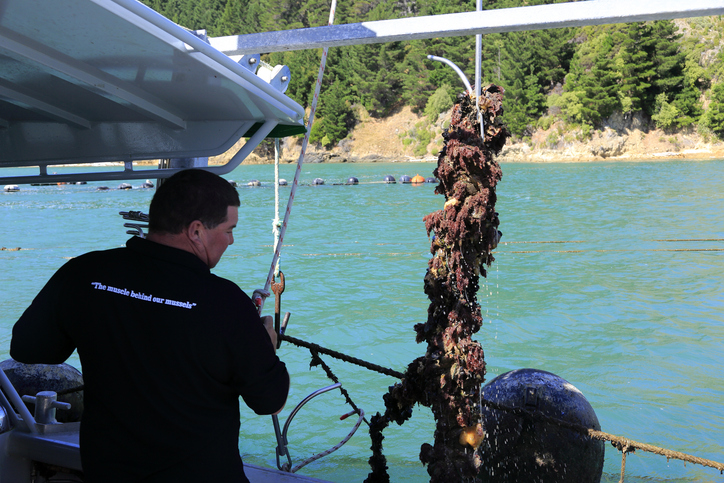
When Anastasios Zakalkas pulled up the ropes of his mussel farm in the Aegean Sea last month, the devastation was clear: the lines were not heaving with molluscs as they should be at harvest time but were instead filled with cracked, empty shells.
It is the second time in three years that record sea temperatures have hit the mussel harvest in northern Greece, where farmers said they saw a 90% drop in the 2024 catch. Next year will be a dud too, Zakalkas said, because all the seed for the coming season also perished.
“The destruction we suffered (for next year) was 100%,” 35-year-old Zakalkas said aboard his fishing boat on a balmy morning in late October. “We don’t know how we’ll make a living in the new year. Our main and only job is mussels,” he said.
Like other Mediterranean countries, Greece is particularly susceptible to climate change, which this year led to months of above-average temperatures, punishing drought and wildfires. Crops, including chestnuts, apples and cherries have been hit. Scientists say extreme weather linked to global warming could spell bad news for its aquaculture sector too.
A series of heatwaves hit Greece in July, sending sea temperatures in the Thermaic Gulf, its main mussel producing area, above 30 degrees Celsius (86°F) for days – too hot for mussels to survive.
Greece last saw mass mussel deaths in 2021 but scientists forecast that it would not be repeated for another 10 years, said Kostas Koukaras, a biologist who studies marine ecosystems.
“This shows, even to those most sceptical, that the climate crisis is here,” he said.
As world leaders prepare to meet in Azerbaijan’s capital Baku for this month’s U.N. climate summit COP29 – dubbed the “climate finance COP” – Koukaras said governments should help producers deal with climate-related costs.
“We’re very close to the collapse of mussel farming in Greece, so the state needs to support these people,” he said.
Greece’s aquaculture production was worth over 619 million euros in 2021, the third in Europe after France and Spain, according to the Hellenic Aquaculture Producers Organization (HAPO). It is among Europe’s main producers of the Mediterranean mussel and exports nearly all of the 20,000 tonnes farmed annually by small family businesses.
Spain has also seen mussel deaths, although Koukaras said Greece’s sector was hit hardest because nearly all its farms are concentrated in the same region.
For the 100 or so mussel farming families in Zakalkas’ small town of Kymina, the future looks dim. They are seeking state compensation to pay off debts, while others are looking for work in factories, he said.
“We’re afraid,” said Sotiris Tsaros, another mussel farmer. “If this happens again next year, we’ll all leave and everything I’ve done as a farmer for the last 30 years will be gone.”
(Reuters)