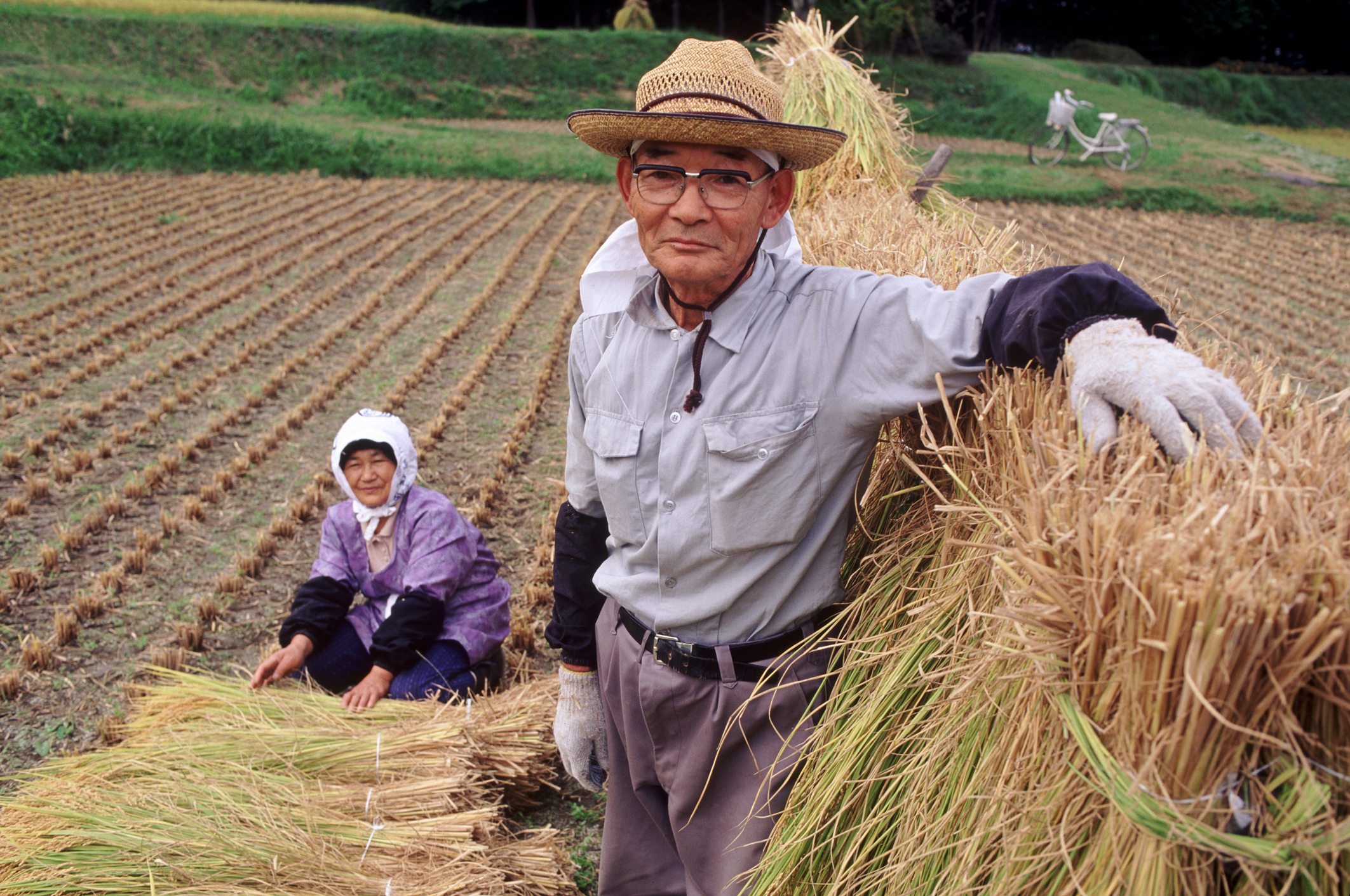
The record high temperatures and sweltering weather that suffocated Japan this summer did not stop 77-year-old farmer Yasuyuki Kurosawa from tending his crops.
Kurosawa, who grows rice, cabbage, wheat and corn in Meiwa, a town in the eastern Gunma prefecture, is one of nearly a million predominantly elderly Japanese who still farm for a living, and who are at a greater risk that most people of falling ill, or even dying, from the heat.
“This is something that we cannot avoid, so we must do what we must do even if it’s hot,” he said.
Agriculture accounts for about 1% of Japan’s economy and almost 70% of its 1.4 million farmers are aged 65 and above.
This July, the number of people working in farming and fishing who were taken to hospital due to heat stroke was 877, nearly five times the number in June, according to the fire and disaster management agency.
In 2022, 29 farmers died from heat stroke.
The authorities this year have issued warnings about heat-related illnesses as the temperatures soared to 40 Celsius (104 degrees Fahrenheit) in several cities. Some parts of Tokyo and other areas in the country have also witnessed record high temperatures for this time of year.
The heat is particularly challenging for farmers like Kurosawa, who works from 5:30 a.m. until noon, and then takes a break until around 3:30 p.m. to avoid being outside during the hottest hours of the day.
Yukihiro, his 39-year-old son and also a farmer, said he drinks about 10 bottles of liquid a day to keep hydrated. He also wears a jacket that has fans attached, and said he was concerned that this extreme heat was becoming more commonplace.
“The heat record is broken every year, and I’m anxious about the situation,” he said, sweat beading on his forehead. “Even if it’s hot outside and we feel anxious, we have to do it while taking precautions against the heat.”
(Reuters)