The Indian Council of Agricultural Research (ICAR) and the Food Corporation of India (FCI) have signed an MoU to develop safer and sustainable alternatives to conventional chemical fumigation for managing storage pests in wheat and rice.
The two-year Phase-I project, supported by the Department of Food & Public Distribution (DFPD), will be implemented by ICAR-Central Institute of Post-Harvest Engineering and Technology (CIPHET), Ludhiana, with trials focusing on nitrogen gas, carbon dioxide (CO2), and a combination of CO2 and phosphine.
The MoU was signed on September 30 by Dr Nachiket Kotwaliwale, Director, ICAR-CIPHET, and Dr A.K. Sinha, Executive Director (Quality Control), FCI, in the presence of senior officials from ICAR, FCI and DFPD.
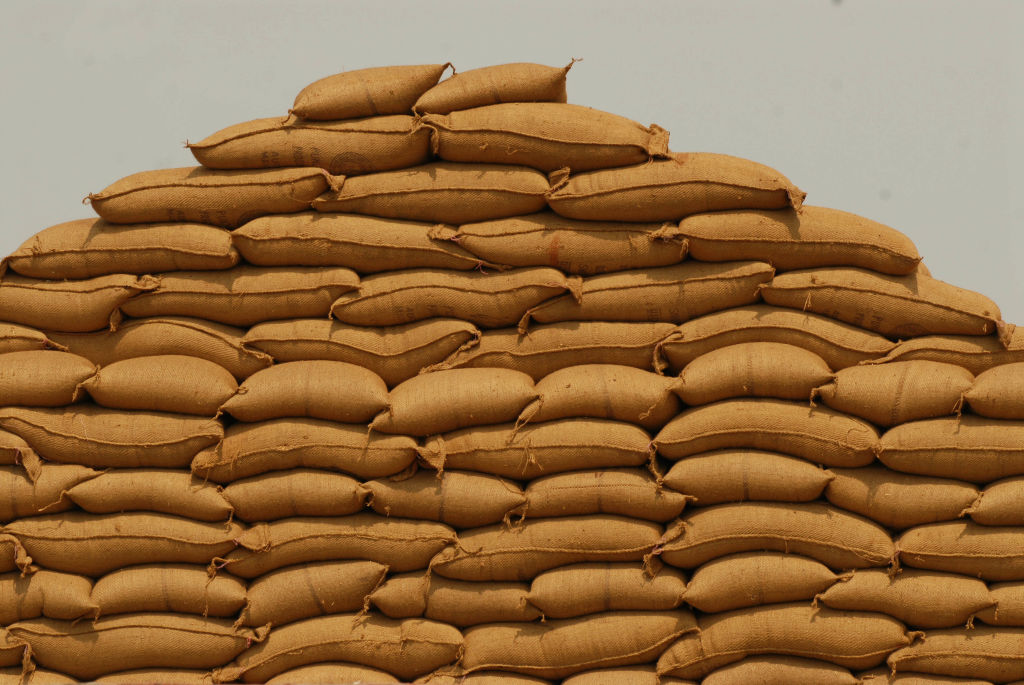
For decades, India’s critical grain reserves have relied heavily on aluminium phosphide (ALP) and malathion for post-harvest pest control. However, widespread and repeated use has contributed to rising pest resistance, with resistance frequencies reaching 72-100 per cent in key Indian states, besides increasing fumigation cycles and operational costs, said a press release by the Ministry of Agriculture & Farmers Welfare.
The existing chemical methods also pose concerns related to occupational exposure, environmental impacts and fumigant residues. The new initiative seeks to address these challenges by standardising the commercial use of nitrogen gas, carbon dioxide (CO2), and a synergistic combination of CO2 and phosphine.
During Phase-I, three major trials will be conducted.
These include nitrogen gas of more than 99 per cent purity for effective management of storage pests in wheat stored in metal silos; combined CO2 and phosphine gas fumigation for managing storage pests in wheat and rice stored in bags at FCI and Central Warehousing Corporation (CWC) warehouses; and CO2 fumigation for managing storage pests in wheat and rice stored in bags enclosed in hermetic covers.
Following the two-year Phase-I pilot, Phase-II will involve a one-year multi-location trial across different agro-climatic zones to establish region-specific Standard Operating Procedures (SOPs).
The initiative aims to develop scientifically validated, scalable and sustainable alternatives to conventional chemical fumigation while addressing concerns related to increasing pest resistance, occupational exposure, environmental impacts and fumigant residues.
-PIB Inputs