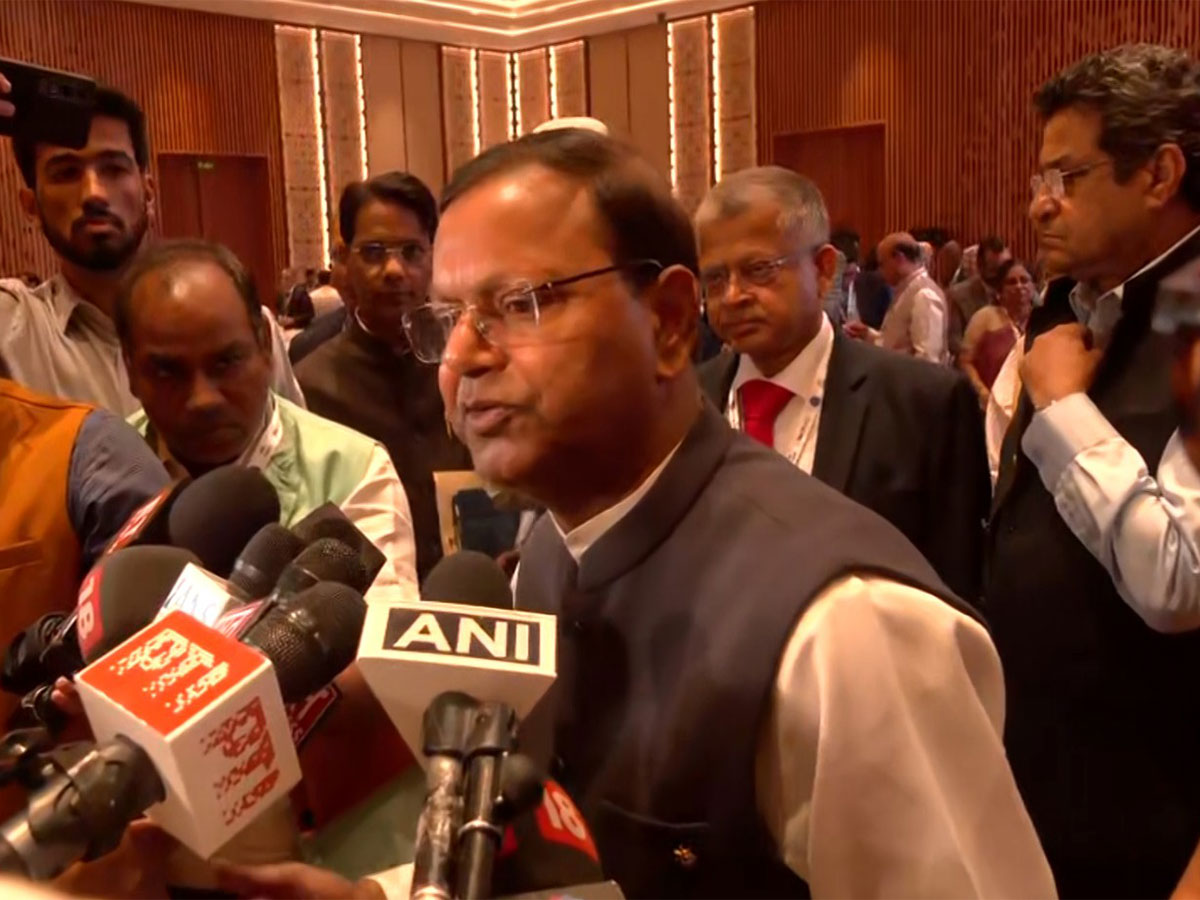
India will review and assess the impact of the 27 per cent reciprocal tariffs imposed by the United States, Union Minister of State for Finance Pankaj Chaudhary said on Thursday. His remarks come in response to the recent tariff hike affecting Indian exports to the US.
Speaking to reporters in New Delhi, Chaudhary emphasized the differing trade priorities of the two nations. “For Donald Trump, it’s America First, and for Modi ji, it’s India First. We will analyze the situation, assess its impact, and determine the best course of action,” he said.
Industry body ASSOCHAM President Sanjay Nayar expressed confidence that India would not be significantly affected by the tariffs. She noted that while the numbers appear steep, India’s position is relatively better compared to several Southeast Asian countries. “There will be a major realignment of intra-Asia trade and supply chains, which will take time. Given that the pharmaceutical sector is exempt, our impact is less severe. However, the Indian industry must improve efficiency, and India should explore ways to provide greater market access to the US,” she added.
On April 2, US President Donald Trump announced widespread tariff impositions on multiple countries, reinforcing his administration’s focus on fairness and reciprocity in trade. Since his second term began in February, Trump has emphasized reciprocal tariffs, aiming to charge foreign nations the same duties they impose on American goods. The policy targets perceived unfair trade practices, including subsidies, non-monetary barriers, and VAT systems, while encouraging tariff reductions or eliminations on US exports.
According to the announcement, tariffs on major economies include China (34 per cent), the European Union (20 per cent), Vietnam (46 per cent), Taiwan (32 per cent), Japan (24 per cent), India (26 per cent), the United Kingdom (10 per cent), Bangladesh (37 per cent), Pakistan (29 per cent), Sri Lanka (44 per cent), and Israel (17 per cent).
Economic experts suggest that these tariffs present a mixed scenario for India’s manufacturing sector. On one hand, Indian exporters benefit from lower tariffs compared to competitors in China, Thailand, and Vietnam, creating a potential arbitrage opportunity. On the other hand, Indian manufacturers could face increased competition in other global markets as exporters from heavily taxed countries seek alternative trade destinations.
(Inputs from ANI)