








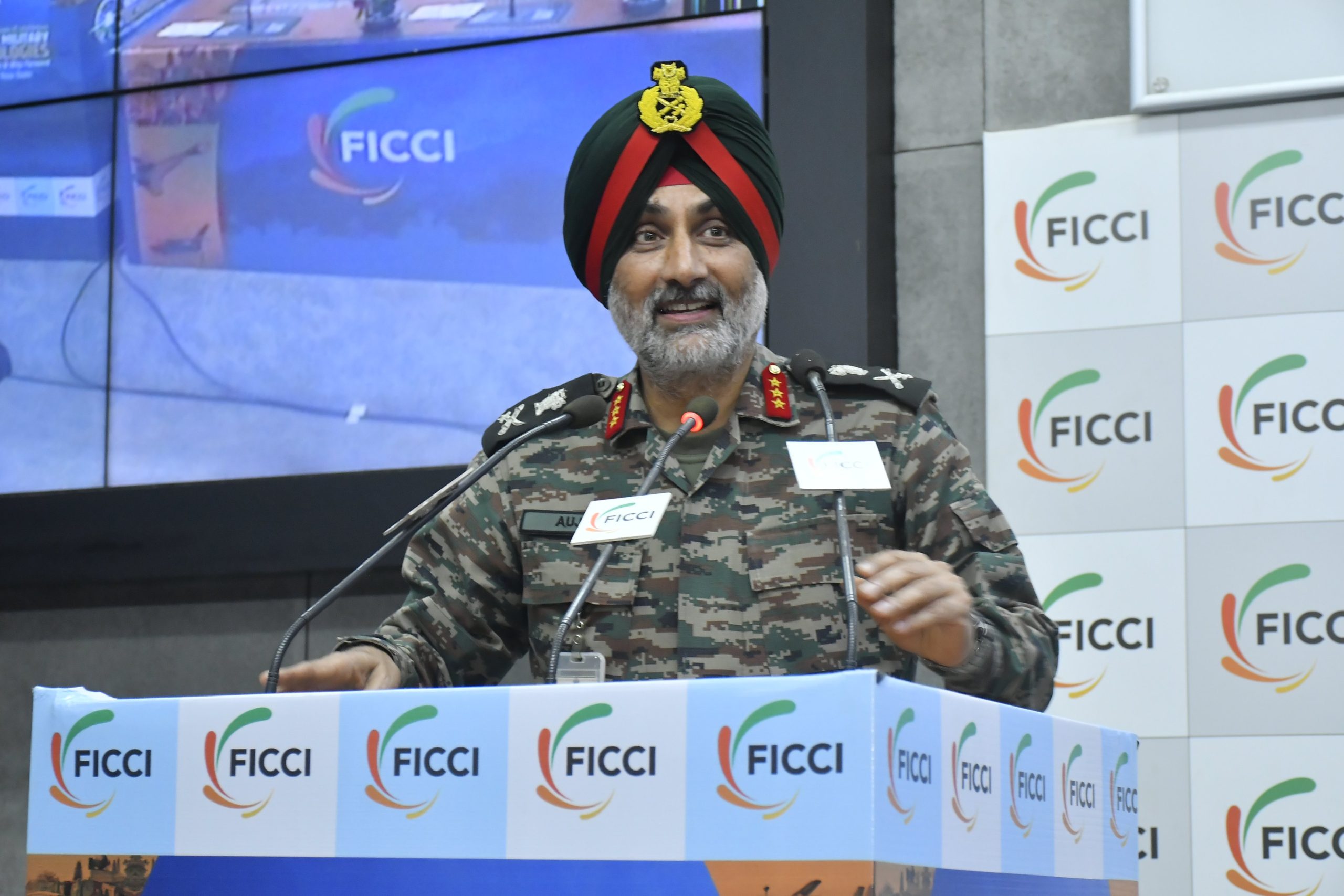
The Indian Army has unveiled a comprehensive modernisation roadmap aimed at transforming its capabilities across multiple domains, ranging from hypersonic weapons to advanced soldier systems, as it prepares for the challenges of future warfare. The announcement was made by Lt Gen Amardeep Singh Aujla, Master General Sustenance of the Indian Army, during the “New Age Military Technologies: Industry Capabilities & Way Forward” conference organised by FICCI.
Outlining the Army’s ambitious vision, Lt Gen Aujla called for unprecedented collaboration between the military, industry, and policymakers to accelerate self-reliance and innovation in defence technology.
At the core of the Army’s modernisation drive is the development of ultra-fast and highly manoeuvrable weapon systems, including hypersonic glide vehicles, hypersonic air-breathing engines (HEBs), and advanced fourth, fifth, and sixth-generation missiles.
“We want to change the deterrence equation by ultra-fast and highly manoeuvrable weapon systems,” Lt Gen Aujla stated, emphasising the need to transition from conventional “dump category” ammunition to smart, precision-guided munitions.
The Army also plans to invest heavily in loitering munitions and PGMs to enhance strike capabilities while minimising collateral damage.
In addition, the service is advancing efforts in directed energy weapons, such as high-energy lasers and microwave systems, for counter-drone operations, missile defence, and anti-satellite capabilities.
Recognising the evolving dimensions of warfare, the Army is placing strong emphasis on cyber and electronic warfare capabilities, aiming for spectrum dominance and both offensive and defensive cyber operations. The force is seeking industry partnerships to develop next-generation cyber defence tools, autonomous EW solutions, and resilient satellite systems.
Another critical focus area is soldier-centric modernisation. The Army plans to equip soldiers with exoskeletons, human augmentation systems, smart body armour, and augmented reality-based battlefield management systems.
“The individual has to be an empowered individual, in terms of agility, in terms of resilience, in terms of endurance,” Lt Gen Aujla said, highlighting the integration of AI-powered helmets, smart apparel, and real-time health monitoring to enhance battlefield effectiveness.
To support these advancements, the Army is revamping its logistics and supply chain infrastructure, integrating technologies such as artificial intelligence, machine learning, blockchain, and the Internet of Things (IoT). The goal is to ensure green, sustainable logistics, cyber-resilient systems, and efficient, future-ready supply chains.
Lt Gen Aujla stressed that the Army will continue to focus on core operational roles, while outsourcing specialised capabilities to industry partners.
He underlined the need for synergy between three key stakeholders: the military, which must clearly define operational needs; policymakers, who must create enabling frameworks; and the industry, which must innovate and deliver tailored solutions.
“You are the people who have to give shape to our desires, our requirements, our needs, which are absolutely operational in nature,” he told industry leaders.
To foster this ecosystem, the Army has called on policymakers to establish defence technology acceleration funds, provide fast-tracked regulatory clearances, and simplify procurement processes. He also recommended the creation of tech hubs, innovation centres, and incubation facilities to drive defence-sector innovation.
“Unless you prepare the environment to support the user and the industry, things won’t work out. It will be just lip service, or it will be a mere slogan that we may keep saying that atmanirbharta is coming, or the self-reliance is,” he warned.
(ANI)