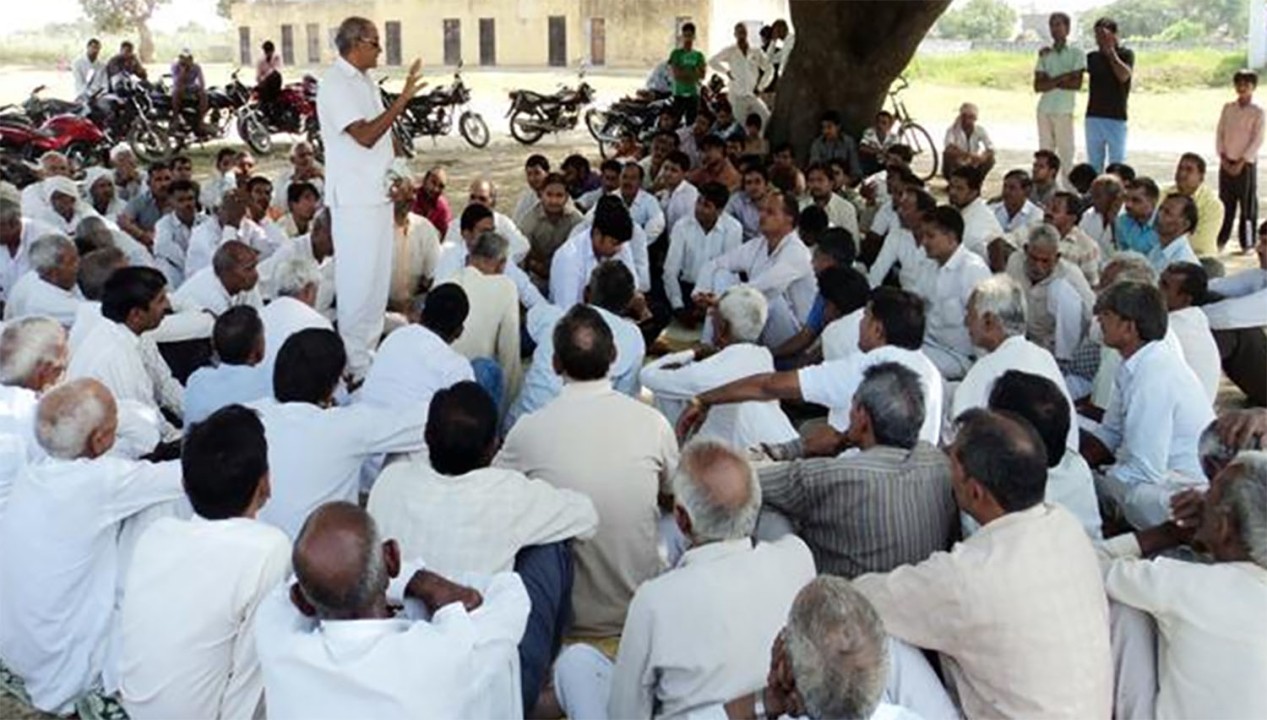
In a significant move to strengthen grassroots governance and track rural progress, the Ministry of Panchayati Raj has launched the first-ever Panchayat Advancement Index (PAI) baseline report for FY 2022-23. The index serves as a comprehensive tool to measure the performance of over 2.5 lakh Gram Panchayats across nine localized Sustainable Development Goal (LSDG) themes, according to the Ministry of Panchayati Raj.
The inaugural PAI data reveals that out of 2,55,699 GPs, 2,16,285 submitted validated data. Among these, only 699 Panchayats (0.3%) qualified as Front Runners, while 77,298 (35.8%) were marked as Performers. A large majority—1,32,392 Panchayats (61.2%)—were classified as Aspirants, and 5,896 (2.7%) were at the Beginner level. No Panchayat achieved the highest “Achiever” category.
Gujarat and Telangana emerged as leaders with the highest number of Front Runner GPs—346 and 270 respectively. Other high-performing states include Maharashtra, Madhya Pradesh, and Uttar Pradesh, while Bihar, Chhattisgarh, and Andhra Pradesh saw a significant concentration of Aspirant GPs.
The PAI assesses Panchayats across nine key themes including poverty reduction, health, child-friendliness, water sufficiency, infrastructure, governance, and women-friendly policies. It is built on 435 indicators aligned with the National Indicator Framework of the Ministry of Statistics and Programme Implementation (MoSPI).
The Ministry further said that PAI will serve as a powerful mechanism for evidence-based planning, localized policy interventions, and targeted development, allowing Panchayats to identify gaps, track progress, and prepare strategic development plans. Over time, it is expected to foster healthy competition among Panchayats while informing policy decisions at both state and national levels.
Data was collected via the multilingual PAI Portal (www.pai.gov.in), and over 2.16 lakh entries were rigorously validated by States/UTs. Data from five States/UTs—Meghalaya, Nagaland, Goa, Puducherry, and West Bengal—was excluded due to pending validation.