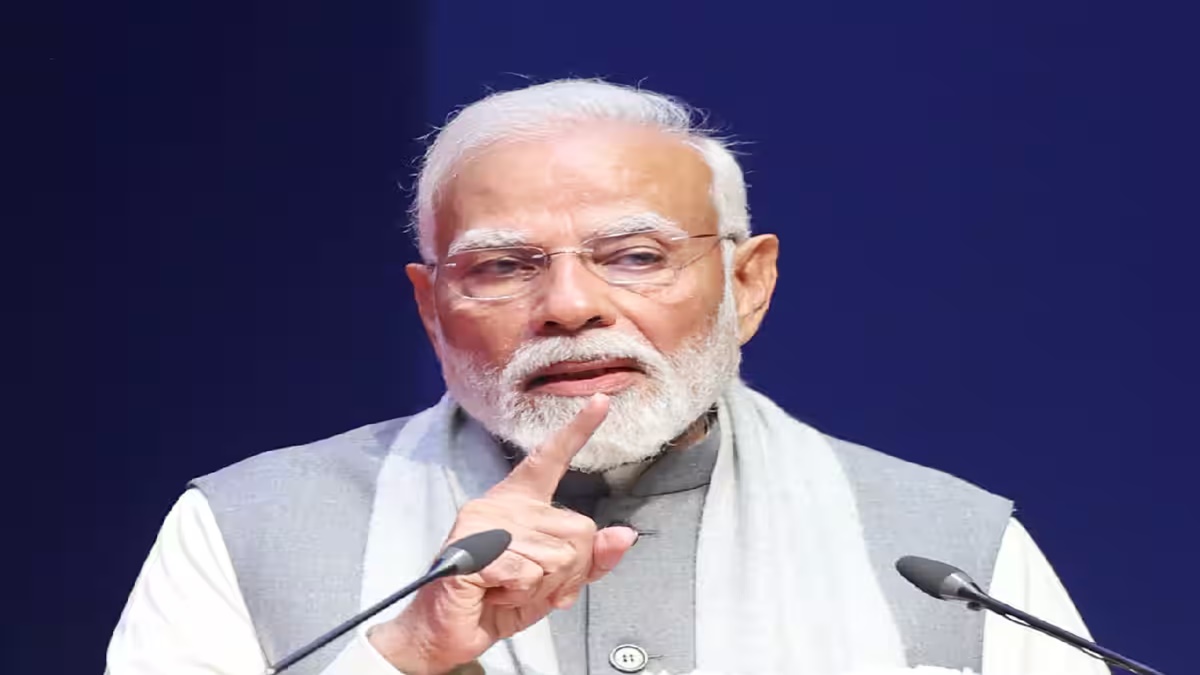
Prime Minister Narendra Modi addressed the Post-Budget Webinar on employment, focusing on the theme “Investing in People, Economy, and Innovation,” on Wednesday. The event brought together officials from 29 ministries, 100 panelists, and over 25,000 participants to discuss key aspects of the Union Budget 2025-26.
In his speech, the Prime Minister said the budget serves as a blueprint for India’s future, giving equal priority to investing in people, the economy, and innovation alongside infrastructure and industry. He stressed the need to enhance investment in capacity-building and talent development, calling on stakeholders to contribute, as these efforts are essential for both economic progress and organizational success.
PM Modi outlined three pillars for investment in people—education, skill development, and healthcare. He announced that the budget includes 10,000 additional medical seats, with a target of adding 75,000 seats over the next five years. He also spoke about expanding telemedicine services to all Primary Health Centres and establishing Day Care Cancer Centres (DCCCs) to improve access to healthcare.
Discussing India’s potential in medical tourism, he mentioned the “Heal in India” initiative, which is attracting international patients. He encouraged stakeholders in the healthcare sector to invest in wellness tourism, particularly in areas like yoga and traditional medicine, to position India as a global hub for healthcare services.
Union Health Minister Jagat Prakash Nadda also addressed the webinar, emphasizing the government’s focus on a holistic healthcare approach. He announced that the government will establish DCCCs in all district hospitals over the next three years, with 200 planned for this year. These centres aim to make cancer treatment more accessible by offering services closer to patients’ homes. He highlighted the expansion of healthcare infrastructure, including Ayushman Aarogya Mandirs and voluntary health screenings for conditions such as cancer, hypertension, and diabetes.
Nadda said that the number of medical colleges has increased from 387 in 2014 to 780 today. He also pointed out the rise in undergraduate and postgraduate medical seats, with a 130% and 135% increase, respectively. He discussed faculty development and training, proposing measures like pooling faculty among medical institutions and hiring retired teachers to address staffing challenges.
NITI Aayog Member (Health) Dr. V.K. Paul highlighted that India has seen a 102% rise in medical colleges over the past decade, with government institutions now outnumbering private ones. He spoke about initiatives aimed at integrating district hospitals with medical education to provide hands-on experience for postgraduate medical students.
Dr. Paul also discussed efforts to address the growing burden of cancer. He outlined a nationwide screening initiative that has reached millions of people for early detection of oral, breast, and cervical cancer. He said the government is working on expanding DCCCs, with a goal to have one in every district. He added that the Ayushman Bharat scheme has significantly improved access to cancer treatment, with a 90% rise in patients receiving care within 30 days of diagnosis.
Health Secretary Punya Salila Srivastava spoke about the need for better coordination between central and state governments in implementing cancer care programs. She highlighted the challenge of overcrowding in tertiary hospitals, noting that nearly half of all cancer patients seek treatment at these facilities. The government aims to decentralize cancer treatment by strengthening district-level care, improving referral systems, and training healthcare workers in chemotherapy administration.
A breakout session on cancer care was held during the webinar, focusing on the expansion of DCCCs. Experts discussed the need for standardized treatment protocols, efficient drug supply chains, and training programs for medical staff. Officials from Tamil Nadu and Odisha shared their experiences in developing decentralized cancer care models, which have improved early diagnosis and treatment while reducing patient migration to larger cities.