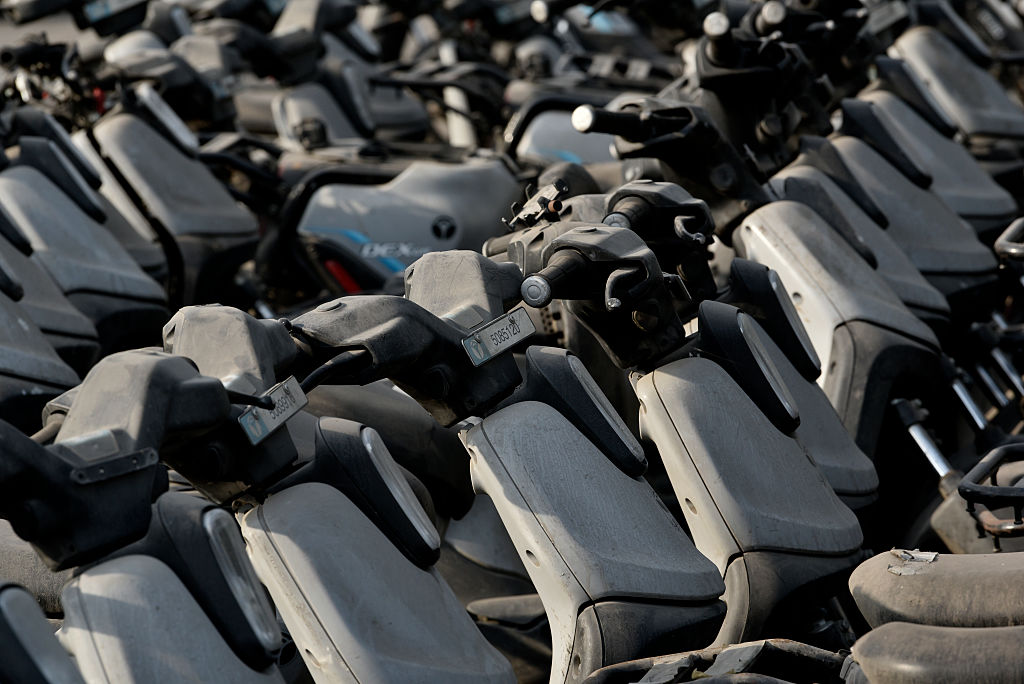
States that provide financial assistance in the form of subsidies and grants are witnessing stronger adoption of two-wheeler electric vehicles (2W-EVs), according to a study by the Reserve Bank of India (RBI).
The report highlighted that supportive state-level policies have played a key role in shaping EV adoption across different regions of the country.
“Most state governments have been offering incentives such as subsidies, along with tax and registration fee waivers on every new 2W-EV purchase. On the other hand, a few states did not offer any additional subsidies beyond tax and registration fee waivers,” the report stated.
The analysis of 23 states showed a clear difference in adoption trends. In the September 2023 quarter, six states that only offered tax and registration fee waivers, without any extra subsidy, recorded a sharp 24% fall in adoption ratio on a quarter-on-quarter basis.
By contrast, 17 states that provided top-up subsidies in addition to tax and registration waivers witnessed a smaller decline of 17%. This indicates that higher financial support helped cushion the impact of subsidy reductions under the FAME II scheme.
The report further noted that Southern and Western states have been ahead in 2W-EV adoption. These early movers in formulating EV policies have consistently shown better adoption ratios than the all-India average, while Northern and Eastern states have lagged.
Charging infrastructure also remains a critical factor. Of the top five states with strong charging networks, three—Karnataka, Goa, and Maharashtra—are in the southwest, while Delhi and Haryana from North India also feature among the top five.
To improve adoption, several states, including Andhra Pradesh, Assam, Bihar, Chhattisgarh, Gujarat, and Kerala, have offered capital subsidies ranging from 25% to 60% on charging station equipment. Delhi has gone further, sanctioning a 100% grant on the purchase of charging equipment.
The RBI emphasized that adoption of 2W-EVs is critical for achieving India’s decarbonisation goals. It underlined that state-level measures such as subsidies, tax waivers, and investment in charging infrastructure remain central to encouraging EV uptake in a price-sensitive market like India.
— ANI