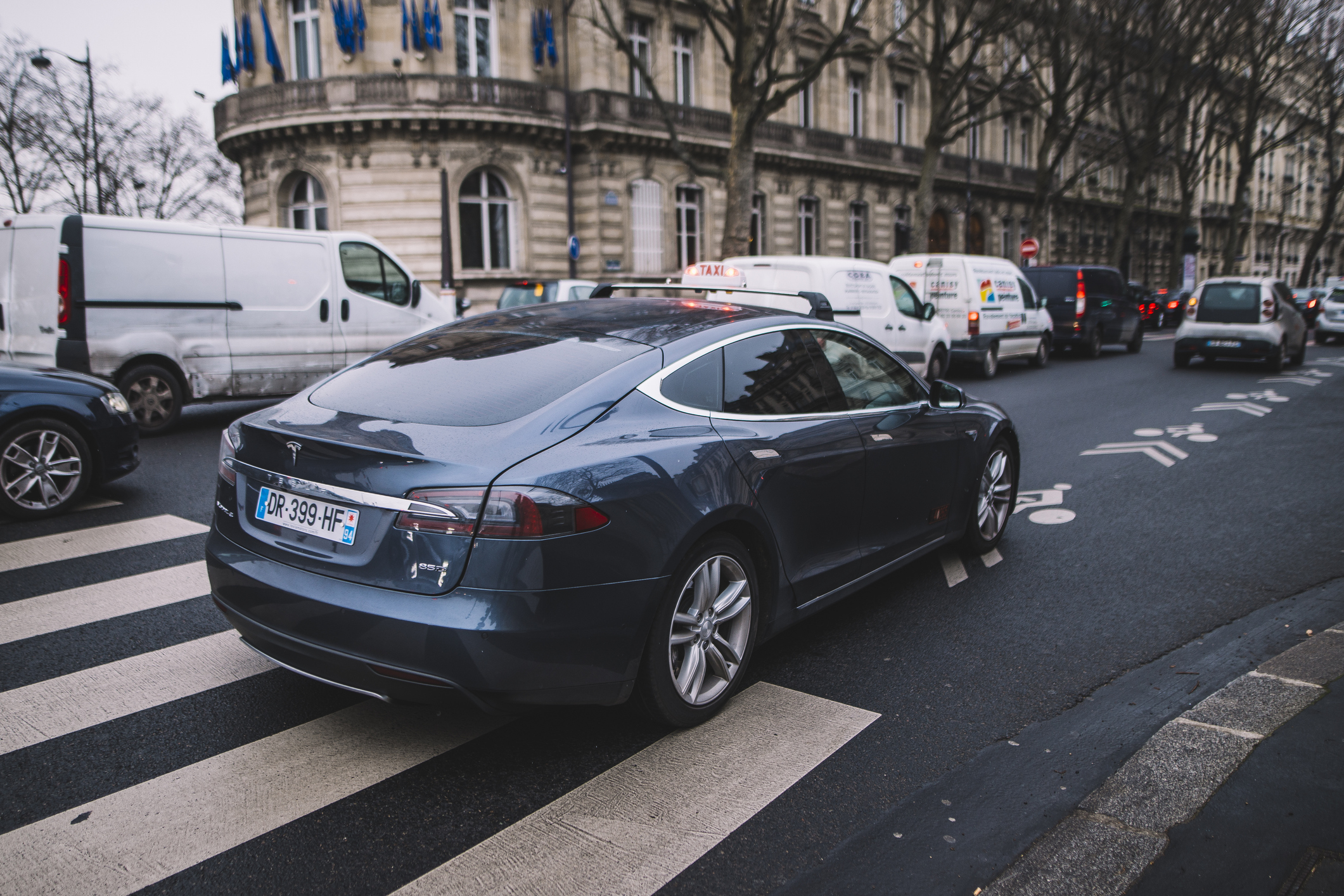
Tesla CEO Elon Musk on Wednesday said the electric vehicle maker will roll out driverless ride-hailing services to the public in California and Texas next year, a claim likely to face significant regulatory and technical challenges.
“We think that we’ll be able to have driverless Teslas doing paid rides next year,” Musk said on Tesla’s quarterly earnings call. He said Tesla currently offers an app-based ride-hailing service to employees in the San Francisco Bay Area.
His statement doubled down and expanded on a pledge he made at Tesla’s robotaxi unveiling two weeks ago, where he said he expected to roll out “unsupervised” self-driving in certain Tesla vehicles in 2025. The lack of a business plan around the robotaxi at that event sent its stock plunging.
On Wednesday, however, Tesla won back some investor confidence by forecasting a jump in vehicle sales next year.
In California, in particular, the company will face an uphill climb in securing the needed permits to offer fully autonomous rides to paying customers.
Alphabet’s Waymo, which offers paid rides in autonomous vehicles in the Bay Area and Los Angeles, as well as in Phoenix, Arizona, spent years logging millions of miles of testing before it received its first permit from the California Public Utilities Commission (CPUC), which regulates ride-hailing services.
The California Department of Motor Vehicles, which regulates testing and deployment of autonomous vehicles in the state, told Reuters that Tesla last reported using its autonomous vehicle testing permit in 2019. That permit requires a safety driver.
The company does not have, and has not applied for, a testing permit without a driver, the agency said.
Tesla did not respond to a request for comment.
As for the ride-hailing service in the Bay Area for employees, CPUC said Tesla does not need a permit, because employees are not considered passengers.
At Tesla’s robotaxi event on Oct 10, Musk unveiled a two-seater, two-door “Cybercab” without a steering wheel and pedals that would use cameras and artificial intelligence to navigate roads.
On Wednesday, he acknowledged the potential difficulties in California, saying “it’s not something we totally control,” but adding “I would be shocked if we don’t get approval next year.”
Ross Gerber, a Tesla shareholder and CEO of Gerber Kawasaki Wealth and Investment Management, said “dealing with regulators is a very difficult process” and that no one should consider it “a walk in the park.”
Texas has far fewer regulatory requirements for autonomous vehicles than California, but companies often test for months or years before deploying paid services.
Rules around deployment of autonomous vehicles are largely left to individual states. Musk on the call said there should be a “national approval process for autonomy.”
Tesla’s advanced driver assistance system, called Full Self-Driving (FSD), which is the bedrock for Tesla’s robotaxi ambitions, has faced questions from regulators.
Last week, the U.S. National Highway Traffic Safety Administration (NHTSA) opened an investigation into 2.4 million Tesla vehicles equipped with FSD after four reported collisions, including a 2023 fatal crash.
Still, the idea of Tesla rolling out a robotaxi fleet sent shares of ride-hailing apps Uber and Lyft down 2.3% in post-market trading.
(Reuters)